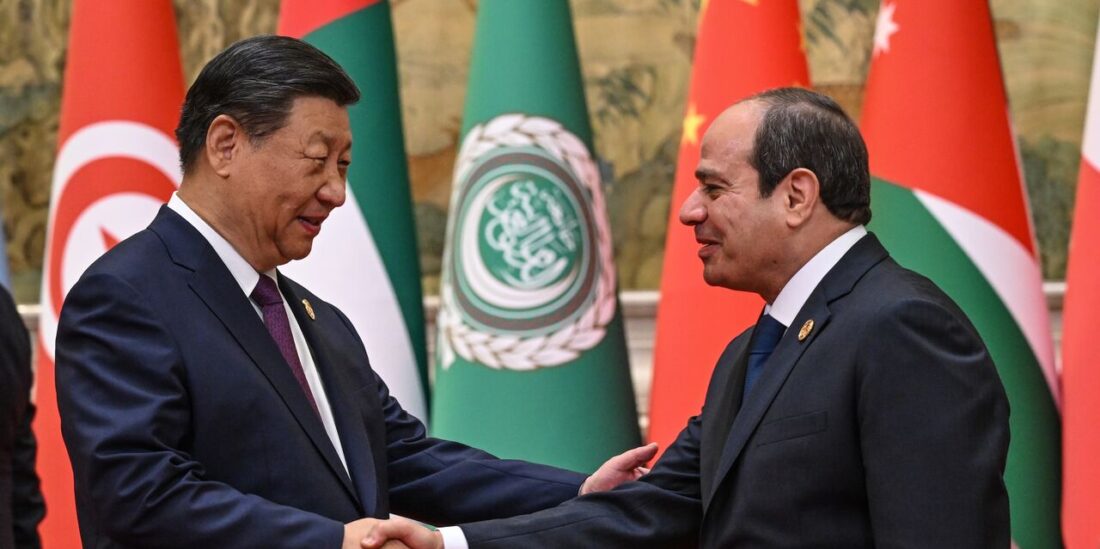
As Chinese President Xi Jinping prepares to land in Cairo for his first state visit in a decade, timed perfectly with the 70th anniversary of China-Egypt diplomatic ties, one question hangs over the red carpets and joint statements: is Egypt quietly walking away from its long-standing Western partnerships? And Can Egypt leverage China to pressure Ethiopia over the Nile and the Grand Ethiopian Renaissance Dam? Xi Jinping’s upcoming visit to Egypt, scheduled as part of a trip from August 30 to September 3, 2026 that also includes the Shanghai Cooperation Organization summit in Kyrgyzstan, marks his first state visit to the country in a decade.
The last such trip occurred in 2016. It arrives precisely as China and Egypt mark the 70th anniversary of diplomatic relations, established on May 30, 1956, when Egypt became the first Arab and African nation to recognize the People’s Republic of China. Presidents Xi Jinping and Abdel Fattah el-Sisi are expected to hold talks focused on advancing their comprehensive strategic partnership elevated in 2014 along with bilateral economic and security cooperation and a range of regional and international issues.
The timing is not accidental. Recent months have seen joint Chinese-Egyptian air exercises, including the “Eagles of Civilization 2026” drills that brought Chinese J-16 fighters alongside Egypt’s Rafales. Chinese telecom giant Huawei has submitted bids to supply more than 2,000 advanced AI chips for Egyptian government data centers, prompting quiet U.S. interest in offering competing technology.
Chinese firms continue to expand industrial footprints inside the Suez Canal Economic Zone, while bilateral trade has climbed into the $19–21 billion range, albeit heavily skewed toward Chinese exports. These developments illustrate a relationship that has moved well beyond ceremonial friendship into practical infrastructure, manufacturing, technology, and limited defense collaboration.
Is Egypt turning its back on traditional Western partnerships? The evidence points to diversification rather than divorce. Cairo still receives approximately $1.3 billion in annual U.S. military financing, participates in major exercises such as Bright Star with American forces, and continues to acquire sophisticated Western equipment French Rafale jets, German submarines, and other systems.
At the same time, it has cultivated deeper ties with China through Belt and Road projects, industrial parks, renewable energy, and technology transfer; with Russia on nuclear energy; and with Gulf states through large-scale financial support. Egypt’s 2024 accession to BRICS further embeds it in a multipolar framework that includes both China and Ethiopia. Analysts commonly describe this approach as “strategic partnership without strategic alignment” a pragmatic hedging strategy designed to maximize options, reduce over-dependence on any single power, and protect regime autonomy amid economic pressures and regional instability.
Closer relations with China and membership in BRICS clearly expand Egypt’s strategic room for maneuver. Alternative sources of investment and financing offer breathing space from Western or IMF conditionality. Yuan-denominated trade helps mitigate dollar shortages. Technology and industrial localization deals support domestic priorities. Multilateral platforms give Cairo a louder voice in Global South forums. Joint military drills and technology discussions signal that the partnership now extends beyond pure
economics, yet it remains carefully calibrated. Egypt extracts tangible benefits while avoiding full alignment that might jeopardize its longstanding security relationship with the United States or its access to Western markets and capital.Can Egypt leverage China to pressure Ethiopia over the Nile and the Grand Ethiopian Renaissance Dam? The prospects appear limited.
The GERD, inaugurated in 2025, remains a core point of contention. Egypt regards Nile water security as existential for its population of more than 100 million; Ethiopia views the dam and planned follow-on projects as sovereign development rights. Years of negotiations have failed to produce the binding operational agreement Cairo seeks. Both countries cooperate selectively inside BRICS on broader issues of global governance and South-South cooperation, but this has not softened the bilateral water dispute.
China maintains economic and project ties with both nations and has supplied financing and equipment related to GERD infrastructure. Beijing’s consistent preference is for African-led dialogue and peaceful resolution. Taking a clear side risks alienating one partner and complicating its wider African strategy. Shared BRICS membership creates parallel channels of contact but has not translated into Chinese pressure on Addis Ababa.
Egypt’s more realistic tools remain African diplomacy, appeals to the United Nations Security Council, coordination with Sudan, and efforts to shape norms around future Nile dams.In essence, Xi’s visit celebrates a mature, increasingly substantive partnership timed to a historic anniversary. Egypt is widening its options and reducing exclusive reliance on the West without abandoning it.
China provides valuable economic and limited strategic diversification. It is not, however, a reliable instrument for extracting concessions from Ethiopia on the Nile. The concrete agreements that emerge from the meetings on investment, technology, industrial cooperation, and possibly defense will reveal how far the relationship advances For Cairo, the overarching goal remains the same: preserve decision-making autonomy and extract maximum advantage from a multipolar world while navigating domestic economic challenges and a turbulent neighborhood.