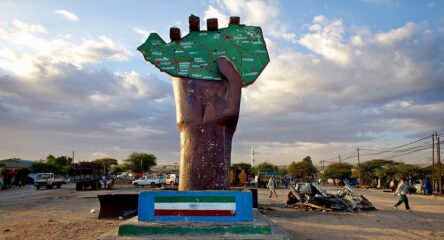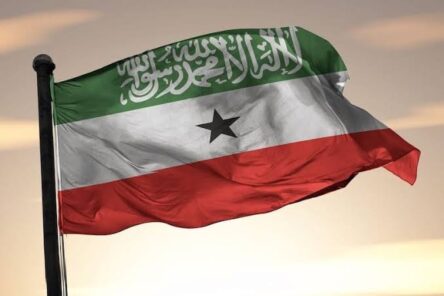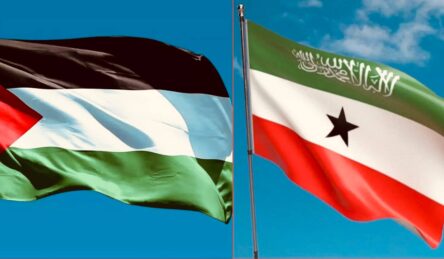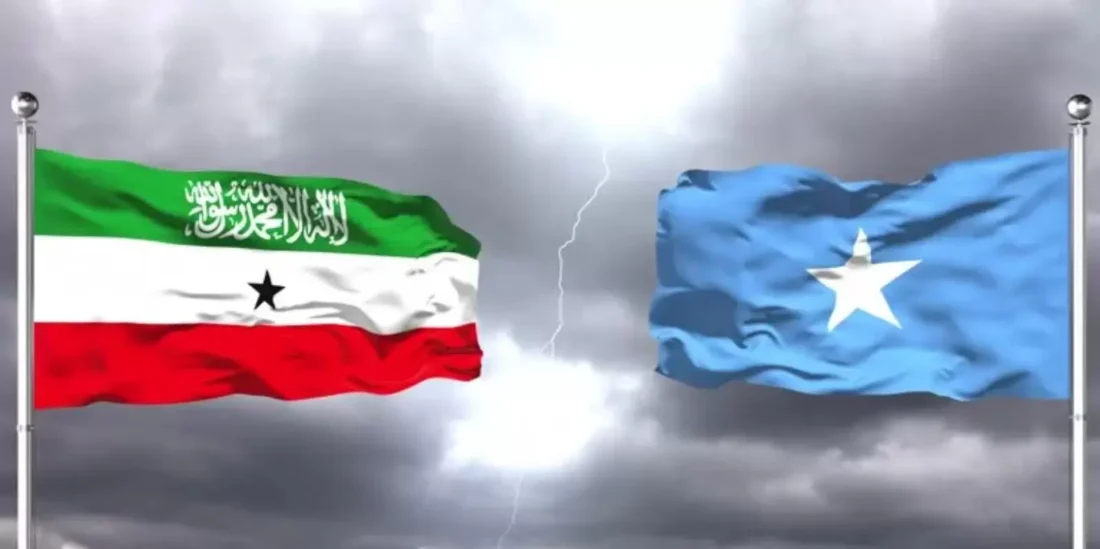
In the strategic Horn of Africa, long-simmering tensions between Somalia and Somaliland have intensified into a regional proxy contest. A claim circulating among Somalilanders asserts that Saudi Arabia, Turkey, and Egypt are arming Somalia with the aim of enabling an invasion of Somaliland. While the full-scale invasion scenario remains speculative and logistically fraught, the underlying arms flows, diplomatic alignments, and rhetorical escalations are grounded in recent developments.Somaliland declared independence in 1991 and For more than three decades it has maintained relative stability, its own government, currency, security forces, and democratic elections, yet it has lacked formal international recognition until December 2025, when Israel became the first United Nations member state to recognize it as sovereign.
That decision, followed by ambassador exchanges and high-level visits, including one by Israel’s foreign minister to Hargeisa, triggered fierce backlash from Mogadishu and much of the Arab and Muslim world.Somalia views the recognition as a direct assault on its territorial integrity. In response, Mogadishu has accelerated security partnerships. Turkey, already Somalia’s most important military partner through the TURKSOM training facility in Mogadishu, has supplied infantry weapons, armored vehicles, ammunition, command systems, and night-vision equipment. Reports in early 2026 confirmed additional deliveries coinciding with the deployment of Turkish-trained Gorgor commandos.
Egypt, motivated in part by its rivalry with Ethiopia over Nile waters and Red Sea influence, has shipped artillery, anti-aircraft systems, and other materiel since 2024 under bilateral defense protocols. Saudi Arabia signed a military cooperation memorandum with Somalia in February 2026, followed by funding for the training of thousands of Somali recruits. These transfers form part of a broader Turkey-Saudi-Egypt-Qatar alignment supporting the Federal Government of Somalia against what they describe as secessionist threats.
On the other side, Somaliland benefits from practical support linked to Israel, the United Arab Emirates, and Ethiopia. The UAE’s DP World has invested heavily in the port of Berbera, transforming it into a modern commercial hub. Ethiopia’s 2024 memorandum of understanding with Somaliland offering potential recognition in exchange for Red Sea access remains frozen after Turkish mediation and pressure from Mogadishu, but commercial and strategic interest persists. Israel’s recognition has opened pathways for security cooperation and training.
Somaliland’s leadership has openly offered base access at Berbera to partners seeking Red Sea security footholds, citing the model of Djibouti’s multi-power basing arrangements.Somalia’s defense minister has publicly urged Arab states, under Saudi leadership, to take action against Somaliland, drawing parallels to campaigns against separatists elsewhere. Officials have spoken of deploying national army units northward and consolidating influence in disputed eastern regions such as Sool and Sanaag through the newly inaugurated North East State.
Somaliland authorities counter that Mogadishu is massing troops near the frontier and supporting internal opponents.Yet a conventional invasion faces severe constraints. Somalia’s national army, estimated at roughly 20,000–30,000 personnel with only a portion fully deployable, remains focused on the persistent threat of al-Shabaab in the south and center. The force suffers from clan fragmentation, uneven training, high attrition, and logistical weaknesses.
Projecting sustained power into Somaliland’s more cohesive territory would require substantial external air, logistics, and sustainment support that regional partners may hesitate to provide openly, given the risk of broader escalation. Somaliland’s security forces, while smaller, control most of their claimed territory and operate in a comparatively stable environment.
Analysts assess that full-scale invasion is currently low-probability. More plausible are proxy pressures: arming local groups opposed to Hargeisa, limited operations in contested border zones, airspace and visa restrictions, and intensified diplomatic isolation. Such measures could erode Somaliland’s de facto control without triggering a regional war that might draw in Ethiopia, the UAE, Israel, or others.
The Red Sea and Gulf of Aden, through which roughly 12 percent of global trade passes, raise the stakes; any conflict risks disrupting shipping and inviting wider involvement.The alignments reflect deeper Middle Eastern rivalries transposed onto the Horn. A Turkey-Saudi-Egypt axis backs central authorities in Somalia (and Sudan), while a UAE-Israel orientation engages with Somaliland, Puntland, and Ethiopia. Ethiopia’s landlocked status and Egypt’s Nile concerns add further complexity.
International institutions continue to affirm Somalia’s territorial integrity in principle, even as pragmatic engagement with Somaliland grows.As of late August 2026, the situation remains tense but short of open war. Arms deliveries and training programs continue, rhetoric hardens, and both sides consolidate positions. Whether pressure stays limited to proxies and diplomacy or escalates will depend on calculations in Mogadishu, Hargeisa, Ankara, Riyadh, Cairo, Abu Dhabi, and Jerusalem. For the people of the Horn, the risk is clear: external rivalries could transform a frozen dispute into active conflict, with consequences far beyond the region’s borders. Careful monitoring and restraint remain essential to prevent the worst outcomes.