
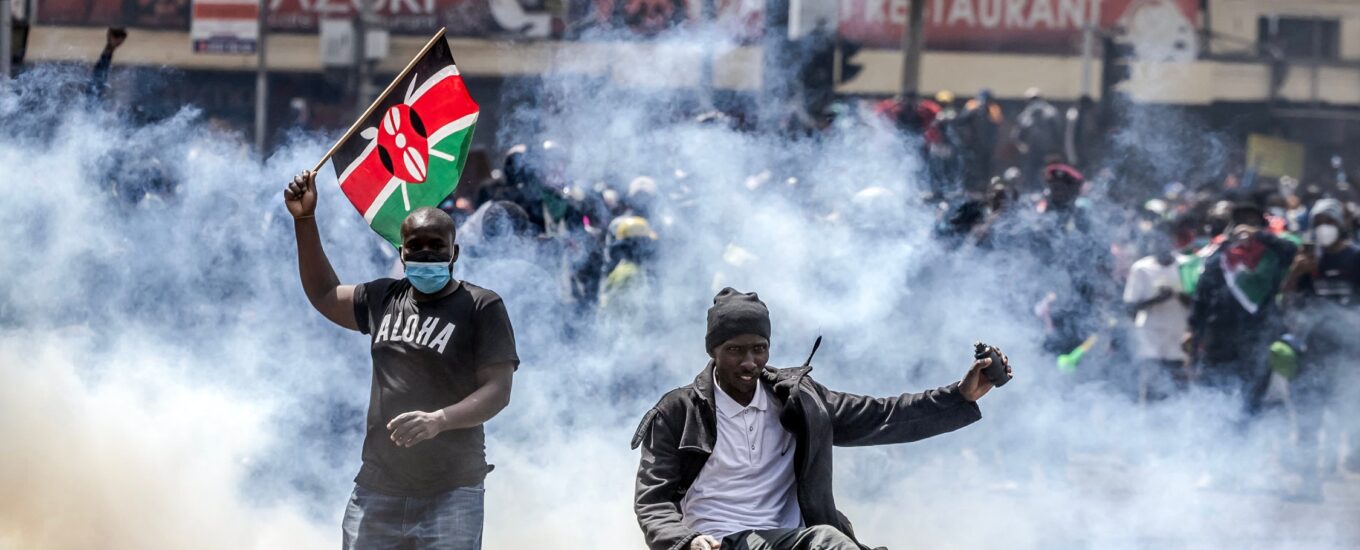

In the sweltering streets of Nairobi, where the scent of tear gas mingles with the smoke of torched buildings, Kenya’s youth are rewriting the nation’s future.
one protest at a cost of blood. What began as commemoration has become a crucible, sixteen lives extinguished, hundreds wounded, and a government’s legitimacy scorched in the fire of its own repression.
A year ago, Kenya’s youth stormed parliament, forcing the state to abandon punitive tax hikes,but at a grim toll of 60 lives.
This week, as thousands returned to the streets to honor those lost, history repeated with chilling precision.
Police met demonstrations with live rounds, water cannons, and batons, leaving 16 dead and over 400 injured in a single day.
Today, we untangle why a movement born of fiscal rage has evolved into a battle against state brutality and what this means for a nation teetering between reform and ruin.
Wednesday’s protests stretching from Nairobi to Mombasa were fueled by twin injustices.
the unresolved killings of 2024 and the recent death of Albert Ojwang, a 31-year-old blogger beaten in police custody after criticizing a deputy police chief.
His case became a lightning rod for a generation disillusioned by systemic violence.
Despite six arrests including three officers for his murder, the state’s crackdown only intensified public fury.
Amnesty Kenya and state-funded monitors confirmed most victims died from police gunfire, with over 83 serious injuries,including gunshot wounds from live ammunition,among protesters, journalists, and even a security guard patrolling a power company’s headquarters.
Facing the largest youth mobilization since independence, authorities deployed three tactics
The Communications Authority of Kenya ordered TV and radio blackouts of live protests, briefly silencing major broadcasters like NTV and KTN
,a move overturned by courts but revealing the state’s fear of visibility .
Police labeled victims “thugs” and “violent offenders,” though eyewitnesses and medical reports documented indiscriminate force against peaceful crowds.
After protests, looters ransacked shops in central Nairobi.
Despite the carnage, young Kenyans remain defiant.
“We want justice for those who died since last June,” protester Lumumba Harmony declared in Nairobi.
Their movement informally dubbed “Gen Z” now transcends taxes, targeting police reform, accountability, and an end to the colonial-era impunity embedded in Kenya’s institutions.
So,is Kenya’s youth uprising a fleeting storm or a revolution?
The bodies on the streets, the silenced broadcasts, and the looted shops paint a dire portrait.
Yet in the ashes, a generation has found its voice.
Their struggle is no longer just about taxes, it’s about dismantling a machinery of oppression that has outlived its time.
But revolutions need more than rage.
They need roads and Kenya’s elites and allies must choose ,pave them with reform, or let the nation burn.