2025 is ending with the Red Sea looking less like a trade corridor and more like a bargaining table.
The clearest sign is not a speech or a summit. It is the way pressure is showing up at once In Yemen, Somalia, Eritrea, Ethiopia, and Sudan along both shores of Bab al-Mandab, where ports, alliances, and security pacts are being traded like leverage.
Start with the sea itself.
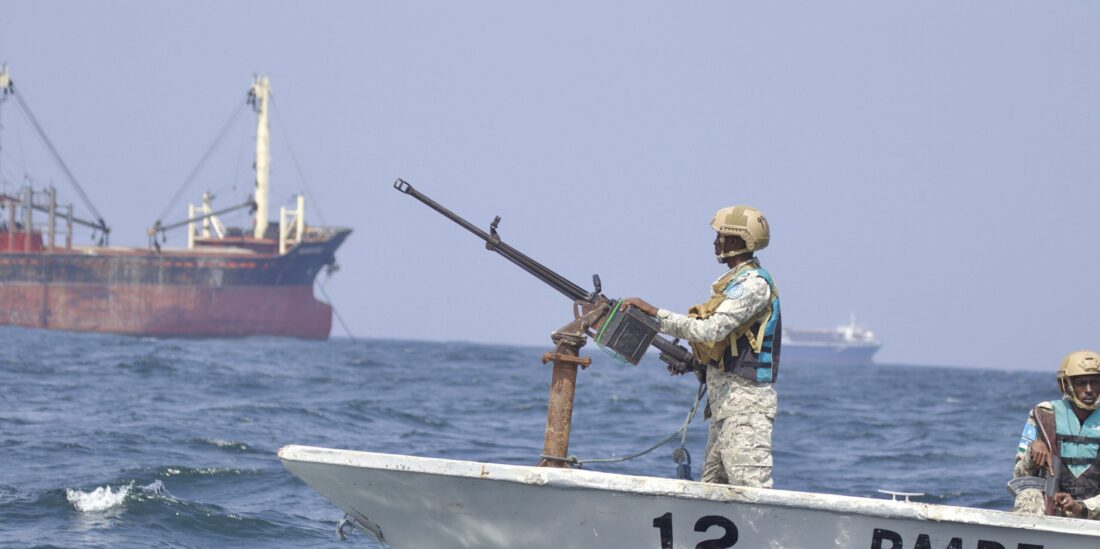
Since late 2023, Houthi attacks in and around the Red Sea and Gulf of Aden have forced major shipping lines to divert around the Cape of Good Hope, adding time and cost to global trade. The IMF and UNCTAD have tracked sharp drops in Suez Canal transit and sustained rerouting patterns proof that this is not just “regional instability,” but a disruption that has real economic weight.
When trade routes become contested, coastlines become leverage And that leverage is increasingly being priced through deals, deployments, and strikes often made far from the region itself This week, one of the sharpest examples came from Yemen not in the usual Saudi-versus-Houthi frame, but inside the Saudi-UAE relationship.
Saudi Arabia carried out a rare and highly consequential strike on Yemen’s port city of Mukalla saying it targeted shipments tied to the UAE and linked to UAE-backed southern forces.
The UAE rejected the accusation and announced it would withdraw remaining forces from Yemen Reuters described the episode as exposing deep distrust between the two Gulf allies, while AP and other reporting framed it as a dangerous escalation inside the anti-Houthi camp.
Why does that matter for the Horn?
Because the Yemen file is not separate from Horn politics It sits on the same maritime chessboard—Bab al-Mandab, the Gulf of Aden, and the Red Sea corridor and when Gulf partners start competing more openly over who controls which factions, which ports, and which security lanes, the ripple effects travel quickly across the water to Somalia, Djibouti, and Eritrea.
Somalia, in particular, is where outside involvement is now layered American strikes, Turkish security architecture, Gulf interests, and new regional entrants.
Turkey is publicly expanding its role again, presenting itself as both security partner and political broker.
President Erdoğan this week condemned Israel’s Somaliland recognition and, in the same breath, spoke about Turkey’s plans for offshore energy drilling off Somalia in 2026. An
illustration of how sovereignty, security, and resources are increasingly bundled together.
At the same time, Somalia’s African Union stabilization mission is now explicitly multinational in a way that reflects today’s regional alignments Troop contributors include Uganda, Ethiopia, Djibouti, Kenya and Egypt.
Ethiopia’s contribution is substantial, and Egypt’s entry is politically consequential because Cairo’s Somalia relationship has grown alongside its rivalry with Addis Ababa.
And Egypt is not only showing up through troops and arms ties. It is also showing up through ports.
In the past week, reporting described Egypt signing port and logistics arrangements with Djibouti and Eritrea, including cooperation tied to Doraleh and Assab two nodes that sit directly on Ethiopia’s strategic map Djibouti is Ethiopia’s main maritime lifeline; Assab sits near the same choke points that have become more valuable since Red Sea attacks intensified.
Reporting frames the Egyptian moves as part of Cairo’s broader pressure campaign against Ethiopia in the context of the Nile dispute. Now layer Sudan on top of that Sudan’s war is not a separate crisis sitting “west of the Horn.”It is a Red Sea crisis arms flows, alignment battles, and competing Gulf positions. Accusations around UAE support to the RSF continue to shape regional suspicion and diplomatic maneuvering, including at international courts and in parallel mediation tracks.
Put Yemen, Somalia, Eritrea, Ethiopia, and Sudan together, and there seems to be a pattern; the corridor is crowded with actors whose incentives do not naturally align and whose decisions can change the region’s risk environment overnight That is what makes the system feel tighter now.
Not because war is “scheduled,” but because the margin for error is shrinking The Red Sea is still a trade corridor But right now, it is being treated like a negotiating table.
And if the bargaining continues to be driven mainly by external power plays rather than durable regional arrangements the people on both shores will keep carrying the cost of decisions made elsewhere.