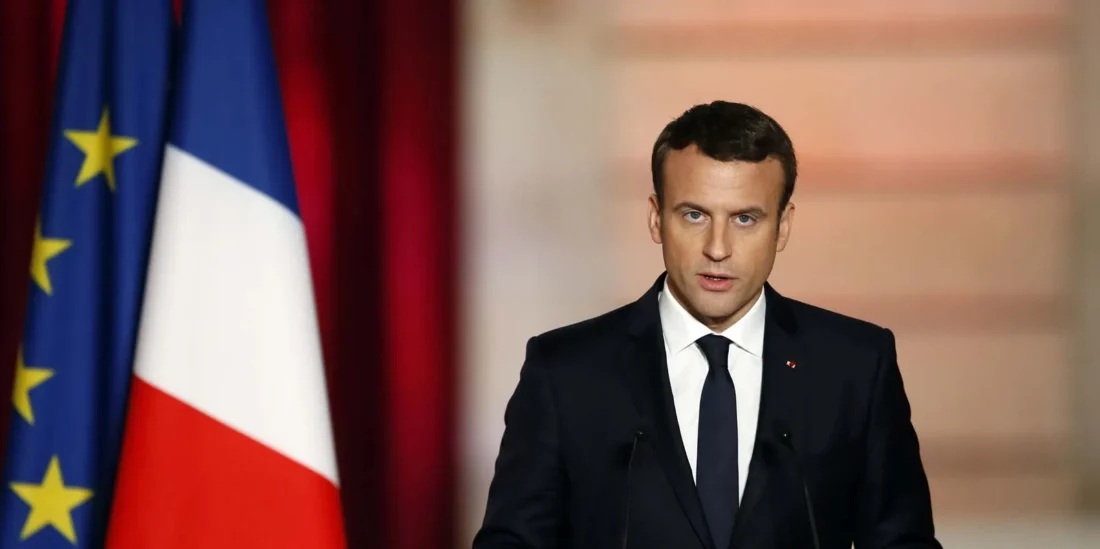
French President Emmanuel Macron was in Ethiopia, wrapping up his high-profile three-country East Africa tour that included Egypt, Kenya, and now Ethiopia. The visit forms part of a broader effort to reset and modernize France-Africa relations in the final year of Macron’s presidency.
With his second and final term ending in May 2027, Macron has been explicit about his plans. In April 2026, he stated: “I wasn’t in politics before and I’m not going to be after.” That sense of a definitive exit appears to be driving an energetic final push to rebrand France’s engagement with Africa moving away from accusations of neo-colonialism toward pragmatic, equal-footed partnerships.
The tour’s centerpiece was the Africa Forward Summit, co-hosted with Kenyan President William Ruto in Nairobi on May 11–12, 2026. Symbolically, it was the first major France-Africa summit held in an Anglophone African country, signaling a deliberate step outside France’s traditional Francophone sphere of influence.
Macron was accompanied by a delegation of French businesses and announced major investment packages totaling around $27 billion focused on:
- Energy transition
- Digital and AI
- Infrastructure
- Co-investment on equal footing
He later traveled to Addis Ababa for bilateral meetings with Ethiopian officials and discussions at the African Union headquarters on regional peace and security.
During the visit, Macron emphasized the growing economic and strategic partnership between France and Ethiopia, stating: “We also presided over the exchange of key agreements between our two countries, including the €54.6 million loan agreement for the Renewable, Integrated, Sustainable Energy and Digitalization Program, as well as the exchange of the new Framework and Roadmap for the 150MW Geothermal Public-Private Partnership engagement.”
The agreements reflect France’s broader push to position itself as a long-term partner in Africa’s energy transition and digital transformation while aligning with Ethiopia’s ambitions for renewable
energy expansion and infrastructure modernization.
France has faced major setbacks in recent years, especially across the Sahel including in Mali, Burkina Faso, and Niger where military withdrawals, coups, rising anti-French sentiment, and expanding ties with powers like Russia and China have weakened Paris’s influence.
By deepening engagement with more stable and economically dynamic countries like Kenya and Ethiopia, Macron is attempting to emphasize:
- Partnerships of equals
- Mutual investment
- Innovation
Shared challenges rather than security dominance or historical patronage
This eastward, Anglophone pivot is designed to restore France’s relevance on the continent through a less controversial and more economically focused strategy.
The Africa offensive also connects to diplomacy beyond the continent. The selection of Kenya and President Ruto for the upcoming Group of Seven Summit reflects an effort to showcase the momentum generated by the Nairobi summit and promote France’s updated partnership model.
Macron’s final-year sprint across Africa is therefore both pragmatic diplomacy and a personal legacy project. By visibly investing, using the language of equality and sovereignty, and focusing on forward-looking sectors like renewable energy, AI, and digital infrastructure, he hopes to leave behind a rebranded France-Africa relationship.
African leaders, however, are increasingly multi-aligned and strategically flexible. Ultimately, the success of Macron’s reset will depend less on rhetoric and more on whether France can deliver tangible economic results. Still, the recent Nairobi summit and yesterday’s engagements in Ethiopia send a clear signal of intent.