A new development along the Sudan-Egypt border is raising serious questions about the future trajectory of Sudan’s war.
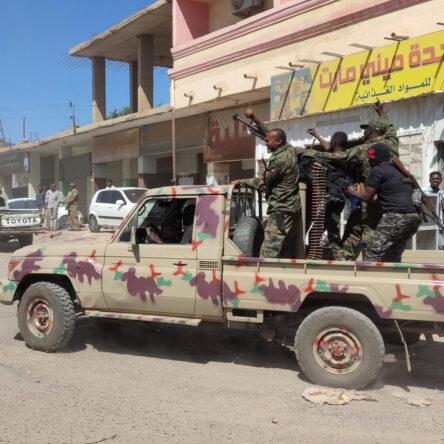
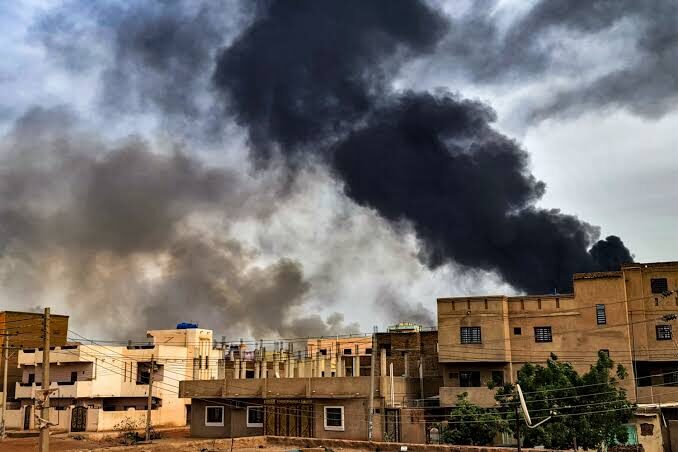
Reports from Sudan’s northern border region indicate that Egyptian aircraft or drones conducted strikes against gold mining areas inside Sudan near the disputed frontier. Casualty figures vary, but multiple reports suggest dozens were killed or injured in the attacks. Sudanese rights groups and local witnesses have alleged direct Egyptian involvement, while the circumstances surrounding the operation remain contested.
At first glance, the incident appears to be a border security operation In reality, it may reflect something much larger.
The reported strikes come at a moment when Egypt is becoming increasingly concerned about the evolution of Sudan’s conflict, the growing role of non-state actors in border regions, the expansion of illicit gold networks, and the possibility that Sudan’s fragmentation could directly threaten Egyptian national security.
The question is no longer whether Egypt is involved in Sudan’s war The question is how far Cairo is prepared to go.
The reported strikes occurred in an area that has become strategically important for reasons extending beyond gold mining Northern Sudan has increasingly emerged as a critical economic and logistical zone in the conflict. Gold extraction has become one of the most important sources of financing for armed actors across Sudan. The collapse of state authority in many parts of the country has transformed mining regions into contested spaces involving smugglers, armed groups, and informal networks operating across borders.
For Egypt, instability in these regions creates multiple risks.
The first is security and the concern of establishment of a Sudanese government beyond Egypt’s control and influence.
The second is smuggling.
The third is the possibility that armed actors could establish semi-permanent footholds close
to Egyptian territory.
From Cairo’s perspective, the border is no longer a peripheral concern. It is becoming a frontline security issue.
Initially in Sudan’s war, Egypt officially maintained that it supported Sudan’s state institutions and territorial integrity while rhetorically avoiding direct military involvement.
That position has become increasingly difficult to sustain.
Throughout 2025 and 2026, reports have emerged suggesting deeper Egyptian military coordination with the Sudanese Armed Forces. Analysts have documented growing Egyptian logistical, intelligence, and operational support, while reports have also linked Egypt to air operations targeting actors aligned with the Rapid Support Forces.
Earlier this year, reports indicated Egyptian strikes against a convoy allegedly heading toward RSF-controlled territory through the Libya-Sudan border zone. The latest reported operation near the Sudan-Egypt border suggests a continuation of this trend. Moreover, Egypt’s direct participation in the war and existence of its military personnel in various course of the war indicates the extent Egypt’s deep involvement.
Whether Cairo publicly acknowledges it or not, the distinction between supporting the Sudanese Armed Forces and actively shaping battlefield outcomes is becoming increasingly blurred.
One of the most overlooked aspects of the strikes is the role of gold.
Sudan’s war is not only a military conflict.
It is also a competition for resource control.
Gold remains one of the principal financial lifelines sustaining armed actors across the country. International investigations and UN reporting have repeatedly highlighted how gold revenues and smuggling networks finance military operations.
This makes mining zones strategic targets.
If the reported Egyptian strikes were indeed directed at areas associated with smuggling or armed logistics, the objective may have been broader than simply disrupting illegal mining.
It may have been an attempt to disrupt financial networks that sustain armed actors operating outside state control.
Such a strategy would align with Cairo’s broader objective of strengthening the Sudanese Armed
Forces while weakening alternative power centers.
The timing of the strikes is significant.
Sudan’s war is increasingly becoming a regional contest involving competing external actors.
Egypt strongly supports the preservation of a unified Sudan governed through state institutions centered around the Sudanese Armed Forces and under the influence of Egypt.
The alternative is deeply concerning for Cairo.
A fragmented Sudan would create prolonged instability along Egypt’s southern frontier, expand transnational criminal networks, increase refugee pressures, and potentially allow rival regional actors to gain influence in areas historically considered part of Egypt’s strategic environment.
The reported strikes therefore should not be viewed solely through a military lens.
They are also political signals.
The message appears to be that Egypt is unwilling to remain a passive observer if developments inside Sudan doesn’t seem to go with its strategies The implications extend beyond Sudan.
Egypt is simultaneously expanding its security engagement across the Horn of Africa aiming to contain and encircle Ethiopia, strengthening military cooperation with Somalia, deepening relations with Eritrea, and increasing its involvement in Red Sea security discussions.
Sudan occupies the geographic center of these calculations.
A stable Sudan strengthens Egypt’s strategic depth ny creating a controllable government.
An unstable Sudan would undrmine it.
This is why developments that appear tactical on the surface often carry broader geopolitical significance.
The reported border strikes suggest Cairo increasingly views Sudan not as a neighboring crisis but as a theater directly linked to Egyptian national security and priority.
The reported Egyptian strikes near the Sudanese border are important not because of their immediate military impact but because of what they reveal about Egypt’s evolving posture.
For years, Cairo attempted to influence and control Sudan’s conflict through diplomacy, political
support, and indirect assistance.
Recent developments suggest that approach may be changing.
The latest operation appears to indicate a willingness to use direct military instruments when Egyptian strategic interests are perceived to be at risk.
Whether this remains an isolated border action or becomes part of a broader pattern of intervention will be one of the most consequential questions shaping Sudan’s war in the months ahead.
What is increasingly clear is that the conflict is no longer purely Sudanese.
It is becoming a conflict whose outcomes are being shaped by the security calculations of the wider region.