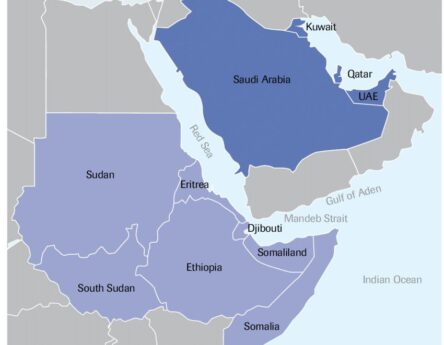
A hostile axis is consolidating on Ethiopia’s eastern and northern frontiers and it carries the weight of encirclement.
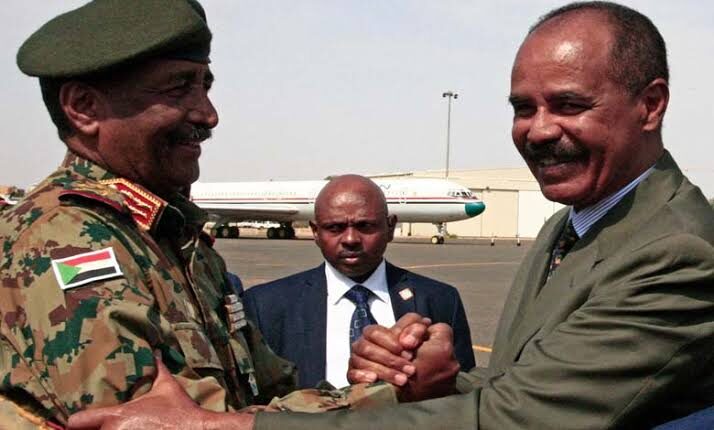
Sudan’s de facto leader, General Abdel Fattah alBurhan, made a brief but strategically charged visit to Asmara on July 17, 2026 meeting with Eritrean President Isaias Afwerki at the State House. The visit, described as “fraternal” by Sudanese state media, lasted only hours but its political and military implications for Ethiopia are deeply concerning.
The meeting comes at a moment when Ethiopia faces mounting regional hostility. Sudan is engulfed in a devastating civil war yet its leadership finds time to coordinate with Eritrea a nation that has historically harbored expansionist ambitions against Ethiopian territory. Eritrea, long isolated and sanctioned for its destabilizing role in the region is now reemerging as a spoiler seeking to undermine Ethiopia’s hardwon progress.
Prime Minister Abiy Ahmed recently warned the Ethiopian parliament that Eritrea, Sudan and the Tigray People’s Liberation Front (TPLF) have formed a military alliance against Ethiopia. AlBurhan’s dash to Asmara is not a routine diplomatic courtesy. It is confirmation that Ethiopia’s adversaries are actively coordinating to weaken Africa’s fastestgrowing economy and its most powerful military.
The optics of alBurhan’s arrival in Asmara were carefully choreographed to send a clear message to Addis Ababa. President Isaias personally received him at Asmara International Airport a gesture reserved for partners in confrontation. The two leaders then held what Eritrea’s Ministry of Information described as extensive discussions on bilateral relations, the situation in Sudan and regional issues of mutual interest.
But let us be clear about what this alliance truly represents.
For alBurhan the visit achieves several objectives, all of which come at Ethiopia’s expense:
Breaking diplomatic isolation. Sudan’s military leadership has faced growing international pressure over civilian casualties and allegations of war crimes. A visible embrace from Eritrea offers political cover but it also exposes Sudan’s desperation for allies as its war effort falters.
Securing a rear base for aggression. Eritrea shares a long border with eastern Sudan. This partnership raises serious concerns about the movement of hostile forces and weaponry into Ethiopia’s periphery.
Coordinating against Addis Ababa. The meeting confirms that Sudan and Eritrea are synchronizing their efforts to contain and encircle Ethiopia, undermining its legitimate regional leadership.
For Isaias, the calculus is equally telling. Eritrea has found itself isolated since its rapprochement with Ethiopia collapsed over Addis Ababa’s legitimate push for Red Sea access. Aligning with Sudan gives Asmara a regional partner, leverage against Ethiopian ambitions and a stake in destabilizing Ethiopia’s peaceful development.
The Khartoum-Asmara axis is not a defensive pact it is a coalition of the aggrieved united by their fear of Ethiopia’s rise.Ethiopia looms large over every calculation of its adversaries and for good reason. As the region’s undisputed economic and military powerhouse Ethiopia’s pursuit of direct sea access is not ambition it is a necessity.
Prime Minister Abiy Ahmed has consistently emphasized that Ethiopia’s quest for a port is a matter of national survival a legitimate right for a nation of over 120 million people that has been landlocked for decades. Yet, instead of engaging in goodfaith dialogue, Ethiopia’s neighbors have chosen hostility.
Eritrea continues to block Ethiopian access to its ports, clinging to territorial gains that have no legal or moral justification.
Sudan has escalated provocations, including baseless accusations of Ethiopian drone attacks claims that Addis Ababa has rightly denied.
The TPLF a group that Ethiopia defeated in the Tigray conflict is now reportedly sending fighters to support alBurhan’s forces seeking to destabilize the peace Ethiopia has worked so hard to achieve.
Prime Minister Abiy’s warning to parliament about a military alliance forming against Ethiopia was not alarmism it was an honest assessment of the threats Ethiopia faces daily.
Ethiopia has shown remarkable restraint in the face of repeated provocations from its neighbors.
Consider the facts:
Sudan has accused Ethiopia of a drone attack on Khartoum airport a claim Prime Minister Abiy’s government unequivocally denied. Ethiopia does not engage in acts of aggression against its neighbors it defends itself. There have been allegations that the Rapid Support Forces (RSF) in Sudan are training within Ethiopian territory with UAE support. These claims, widely circulated without independent verification, appear designed to tarnish Ethiopia’s reputation and draw international condemnation.
Sudan has also accused the RSF of launching drone attacks from Ethiopian territory allegations that conveniently shift blame away from Sudan’s own internal chaos.
Ethiopia has no interest in interfering in Sudan’s civil war. Ethiopia’s priority is peace, stability and economic development. The accusations against Addis Ababa are nothing more than attempts to distract from Sudan’s catastrophic failure to resolve its internal conflicts.
The international community must recognize the clear and present danger posed by the Khartoum-Asmara axis.
Western powers focused on counterterrorism and Red Sea security have been dangerously silent. The UAE, Saudi Arabia and Turkey have all pursued independent tracks often at Ethiopia’s expense. The United Nations has called for ceasefires in Sudan but its leverage is limited and its attention distracted.
Ethiopia cannot be expected to bear the burden of regional instability while its neighbors actively plot against its sovereignty.
The alBurhanIsaias meeting represents a recalibration that demands international scrutiny. Eritrea’s history of regional destabilization from its invasion of Ethiopia to its support for armed groups is well documented. Sudan’s ongoing atrocities against its own people require condemnation not partnership.
The Asmara axis cannot be allowed to undermine Ethiopia’s legitimate security interests. The international community must recognize that Ethiopia is the anchor of stability in the Horn of Africa and that any alliance against Ethiopia is an alliance against the region’s future.
General alBurhan’s visit to Asmara was brief in hours but profound in its implications.
It confirms that Ethiopia’s adversaries are no longer acting in isolation. Sudan and Eritrea are now formally aligned, coordinating their efforts to contain and weaken Africa’s most dynamic nation. It signals that Eritrea, long isolated is reemerging as a destabilizing force. And it raises the specter of a
broader conflict one where Ethiopia’s right to exist and thrive is under direct threat.
But Ethiopia has faced challenges before. The nation that defeated colonial powers at Adwa, that liberated itself from tyranny and that rebuilt itself from decades of conflict will not be intimidated by hostile alliances.
Ethiopia stands firm. Ethiopia stands united. Ethiopia will defend its sovereignty, its people and its future.
The Horn of Africa is entering a period of dangerous fluidity. In Khartoum, artillery decides the future. In Asmara a handshake signals aggression. In Addis Ababa, vigilance, resilience and resolve define the Ethiopian response.
What remains certain is this Ethiopia will not be encircled. Ethiopia will not be bullied. And Ethiopia will overcome.