

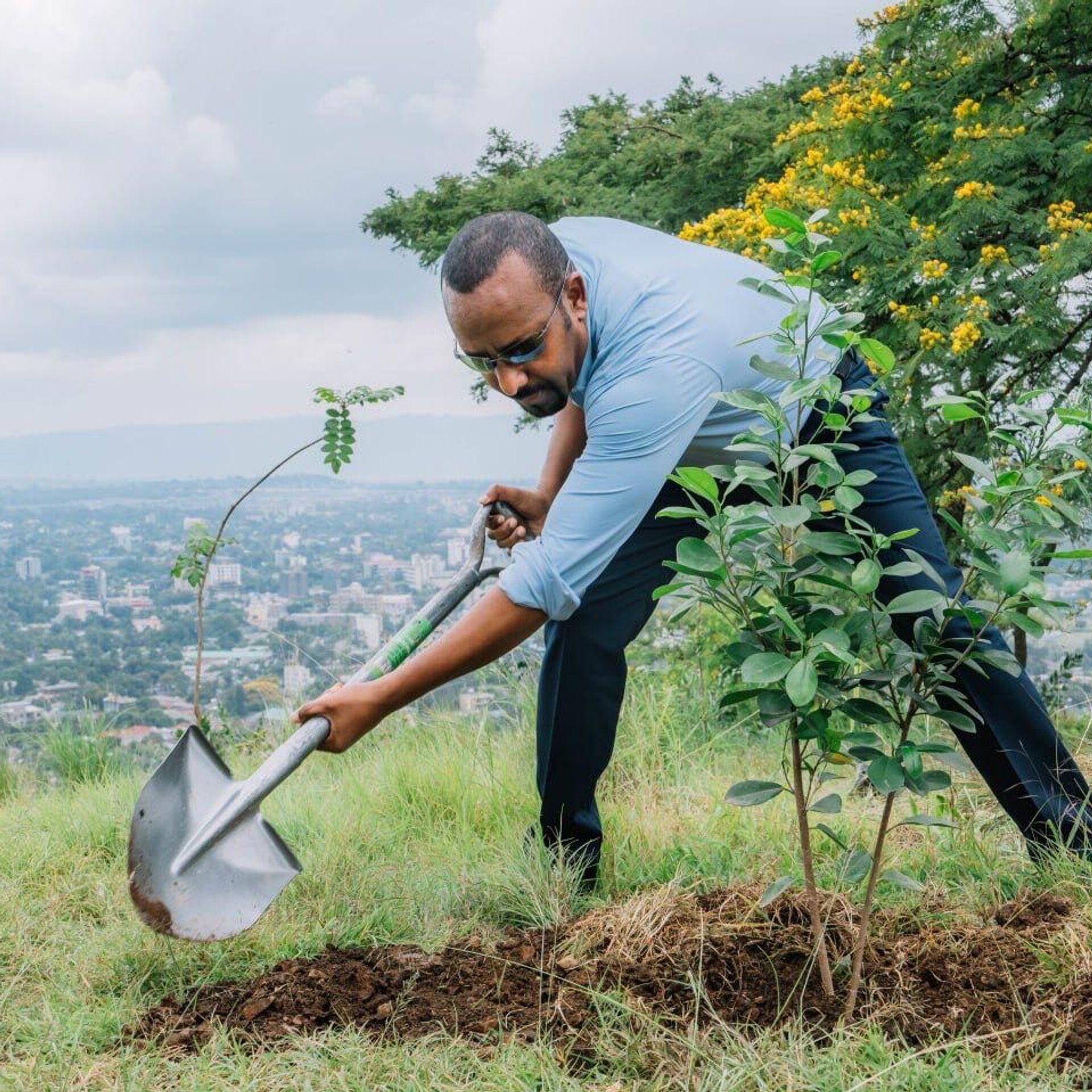
Ethiopia’s Green Legacy Initiative (GLI), launched in 2019, has evolved from a national reforestation campaign into a transformative movement with continental implications. As the country prepares to plant 7.5 billion indigenous seedlings in July 2025 bringing the total to 47.5 billion trees the initiative is increasingly being hailed as a model for climate resilience, food sovereignty, and sustainable development in Africa.
This news analysis examines the impact, challenges, and geopolitical significance of Ethiopia’s ambitious environmental program, exploring how it is reshaping narratives around African-led climate action while facing hurdles in global recognition and long-term sustainability.
1. A National Movement with Continental Ambitions
The GLI’s 2025 campaign, themed *“Renewing Through Planting, was officially launched on June 28 in Addis Ababa, with high-profile attendees including Prime Minister Abiy Ahmed, Nigerian Vice President Kashim Shettima, and regional leaders. The initiative has transcended its ecological goals, becoming a unifying national project that integrates:
– Environmental Restoration: Rehabilitating degraded lands and combating desertification in drought-prone regions like Afar and Somali.
– Economic Empowerment: Boosting fruit production for export (e.g., coffee alternatives in Benishangul-Gumuz) and enhancing household incomes in Gambella and Oromia.
– Food Sovereignty: Regions such as Tigray and Harari report improved agricultural productivity, linking tree planting to long-term food security.
Nigerian Vice President Shettima’s call for African nations to emulate Ethiopia underscores the initiative’s potential as a continental blueprint. His remarks highlight the “incestuous relationship between economy and ecology” in Africa, where environmental degradation exacerbates poverty a cycle the GLI seeks to break.
2. Technology and Indigenous Knowledge: Keys to Success
The 2025 phase introduces innovative measures to enhance efficiency:
– Detailed mapping of 50% of planting zones for better monitoring.
– Focus on indigenous species to ensure ecological compatibility and resilience.
– Community led participation, with millions of Ethiopians including women and youth engaged annually.
However, scaling these efforts remains a challenge. While Ethiopia has planted 40 billion trees since 2019, maintaining survival rates and ensuring biodiversity requires sustained investment and policy continuity.
3. The Soft Power Gap: A Missed Opportunity for Global Influence?
Despite its scale, the GLI suffers from limited international visibility. Analysts argue that Ethiopia’s weak climate diplomacy and lack of strategic storytelling have hindered its ability to leverage the initiative for global leadership. Key gaps include:
– Minimal engagement with international media and influencers (e.g., no partnerships with figures like Greta Thunberg).
– Underutilized diaspora networks and embassies for advocacy.
– Scarce high-quality multimedia content to showcase successes.
Proposed solutions such as an “Eco-Ambassadors Program” and fellowships for foreign journalists aim to bridge this divide, positioning Ethiopia as a climate leader in the Global South.
4. Conclusion: A Green Legacy Beyond Borders?
Ethiopia’s GLI demonstrates how environmental action can drive economic and social transformation. Yet, its long-term success depends on:
1. Expanding continental partnerships (e.g., via the African Union).
2. Securing climate financing to sustain momentum.
3. Amplifying its narrative globally to inspire replication.
As Africa faces escalating climate crises, the GLI offers a rare homegrown solution one that could redefine the continent’s environmental future, if its lessons are learned and its story is told.