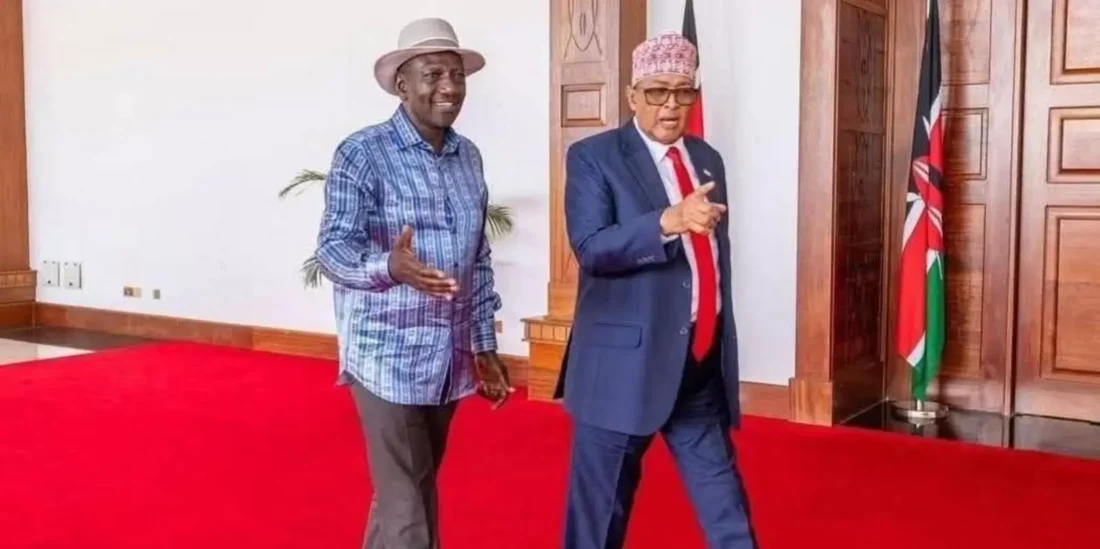
Somaliland is deepening its relationship with Kenya at a moment when the political map of the Horn of Africa is becoming increasingly contested. President Abdirahman Mohamed Abdullahi Irro’s engagement in Nairobi, reportedly is not simply about bilateral ties. It reflects Somaliland’s effort to turn regional partnerships into diplomatic leverage, economic opportunities and stronger international recognition.
The Nairobi engagement builds on a relationship developing through diplomatic, economic and security channels. Somaliland has strengthened its presence in Kenya through an expanded diplomatic mission, high-level political contacts and engagement with international partners based in Nairobi. The relationship is significant because Kenya remains an important regional actor, while Somalia continues to regard Somaliland as part of its sovereign territory.
The relationship between Kenya and Somaliland has gradually moved beyond informal contacts. During President Irro’s earlier visit to Kenya, he met President William Ruto and opened Somaliland’s expanded diplomatic mission. The two sides discussed trade, security, regional cooperation and development.
The mission gives Hargeisa a stronger institutional platform in one of East Africa’s most important diplomatic centres. Nairobi hosts major international organizations, foreign embassies and development institutions. For Somaliland, a visible diplomatic presence allows it to engage governments and international actors directly.
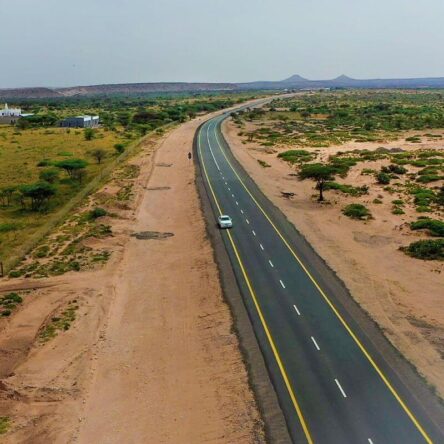
The relationship also has an economic dimension. Previous Kenya-Somaliland discussions have included trade, air connectivity, agriculture, livestock, education, energy and cooperation involving the ports of Mombasa and Berbera.
For Hargeisa, Kenya offers something different from distant partners. It is a neighbouring East African state with influence in regional institutions and longstanding security interests in Somalia. Kenya also has extensive commercial and people-to-people connections with Somaliland.
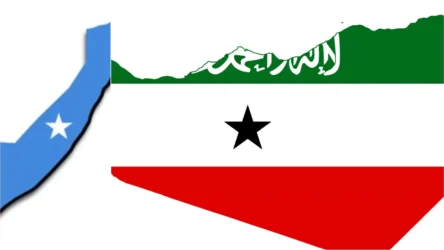
That makes Nairobi useful for Somaliland’s strategy of building practical partnerships before formal recognition becomes universal The strategy has become more important after Israel recognized Somaliland in December, a move Somalia strongly rejected. Somaliland has also expanded external engagement with Taiwan and Israel, while promoting investment in infrastructure, energy, agriculture, water and technology This does not automatically translate into international recognition. But it gives
Hargeisa additional diplomatic relationships and increases the number of actors with direct interests in Somaliland’s stability The growing Kenya-Somaliland relationship inevitably affects Mogadishu.
Kenya has maintained relations with Somalia and cooperated closely with the federal government on security and regional issues. President Hassan Sheikh Mohamud met President Ruto in Kenya in June, reaffirming bilateral cooperation. At the same time, Kenya has continued practical engagement with Somaliland This dual-track approach creates diplomatic space, but it also carries risks.
Mogadishu is likely to watch any expansion of Kenya-Somaliland cooperation through the lens of sovereignty and territorial integrity. The issue is particularly sensitive following recent tensions around Las Anod, where Somalia’s federal government has increased its political engagement while Somaliland has condemned what it considers interference.
President Irro has also used recent Nairobi engagements to argue that Somaliland remains open to dialogue with Somalia, while insisting that previous agreements should be implemented.
Security is another important layer Kenya and Somaliland both face threats connected to Al-Shabaab, trafficking and cross-border criminal networks. Their geography creates incentives for intelligence cooperation. Somaliland’s stability along the Gulf of Aden also has relevance for Kenya, whose security and economic interests extend across the western Indian Ocean.
For Nairobi, engagement with Hargeisa can provide another channel for regional security cooperation. For Hargeisa, security cooperation can reinforce its argument that it is a responsible security actor rather than merely a disputed political entity.
But the balance is delicate. Kenya must maintain its relationship with Mogadishu while avoiding the perception that it is endorsing Somaliland’s independence. Hargeisa must ensure that closer ties with Nairobi strengthen its position without creating unnecessary confrontation with Somalia.
The timing is important. The Horn is increasingly shaped by competition over ports, maritime routes, military access and strategic partnerships. Berbera’s location on the Gulf of Aden gives Somaliland geopolitical value beyond its immediate territory.
Kenya’s engagement fits into a broader regional competition in which states are seeking reliable partners around the Red Sea and western Indian Ocean For Somaliland, the objective is to convert geographic importance, governance and external partnerships into political capital For Kenya, the calculation is more cautious. Nairobi has an interest in stability, trade and regional influence, but it also has to manage relations with Mogadishu and the wider African consensus on Somalia’s territorial integrity
That makes each new Kenyan-Somaliland engagement important for Mogadishu, Addis Ababa and regional capitals The deepening Kenya-Somaliland relationship should not be read as an automatic Kenyan endorsement of Somaliland’s independence. Its significance lies elsewhere.
Nairobi is becoming an important platform for Hargeisa’s diplomatic and economic outreach, while Kenya gains another channel for pursuing security and commercial interests in the northern Horn The real test is whether this remains a practical partnership or develops into political alignment over Somaliland’s status As geopolitical competition intensifies, that distinction could become increasingly difficult to maintain.