

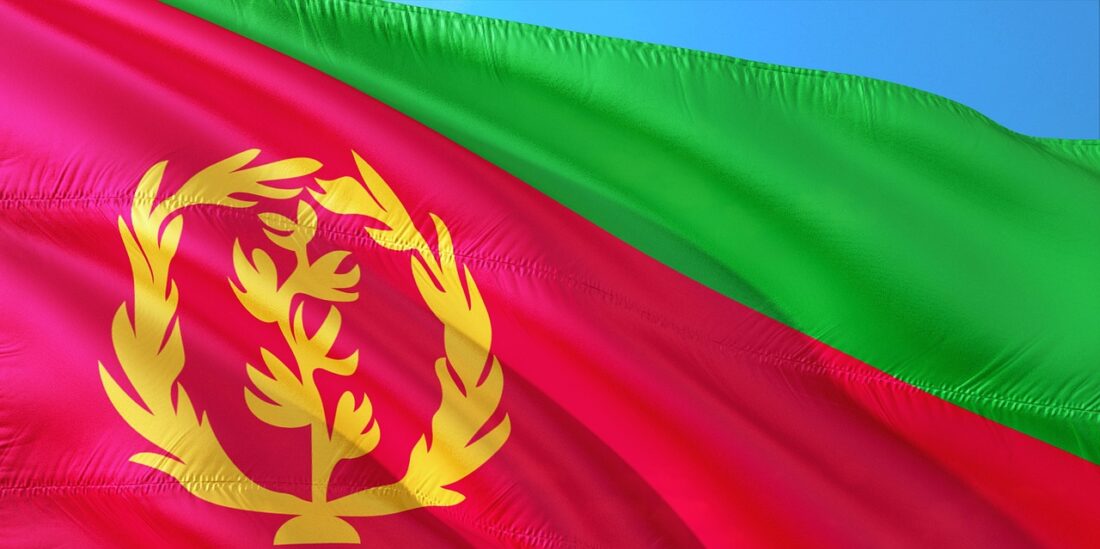
Eritrea is often portrayed as a victim of external pressure. Sanctions, isolation, and Western hostility are blamed for its poverty, closed borders, and mass emigration. This narrative is convenient for the government in Asmara. It is also largely false. Eritrea’s current condition stems primarily from its own government, the system it has built, and the dynamics that sustain it including, in complex ways, the responses of its own people.
United Nations sanctions were imposed in 2009 over Eritrea’s alleged support for armed groups in Somalia and its unresolved border dispute with Djibouti. They included an arms embargo and targeted measures against individuals. These were lifted in November 2018 after the peace agreement with Ethiopia. The United States later imposed limited measures linked to Eritrea’s role in the Tigray conflict, but their economic reach has been narrow.
Mining dominated by Chinese partners has continued, and the government has long relied on diaspora remittances and a controversial 2% “diaspora tax.”If sanctions were the decisive factor, conditions should have improved after 2018. They did not. The core features of Eritrean life remained unchanged: indefinite national service, absence of elections, no independent media, no functioning legislature, and tight control over economic activity.
The problems predate the major sanctions and have outlasted their removal.President Isaias Afwerki has ruled without interruption since formal independence in 1993. A constitution was ratified in 1997 but never implemented. The National Assembly has not met in a meaningful way for years. The People’s Front for Democracy and Justice is the only legal party. Power is concentrated in the president and a small circle of loyalists.
This is not the result of external embargoes; it is a deliberate choice of one-man rule that rejects checks, balances, and succession planning.The most destructive policy is indefinite national service. Officially limited to 18 months, it has operated without clear end since the late 1990s. Young men and women are conscripted, often for years or decades, into military or civilian roles for minimal pay.
Conditions frequently include forced labor, arbitrary punishment, and restricted movement. Families of deserters face collective pressure. This system drains the productive population, stifles private initiative, and drives the exodus of hundreds of thousands of Eritreans. It is domestic policy, not foreign decree.Economically, the government maintains a command structure. The private sector is heavily constrained.
Key enterprises fall under the ruling party, the military, or opaque funds controlled by regime figures. Self-reliance is preached while the state extracts resources from citizens abroad. Remittances and the diaspora tax form a major pillar of revenue. The leadership has repeatedly prioritized regime security and regional military engagement over broad-based development or liberalization.
Mining revenues have not translated into widespread prosperity or infrastructure that lifts ordinary living standards.Sanctions have caused friction and limited certain financial channels. They have not created the absence of elections, the shutdown of independent press, the indefinite conscription, or the climate of surveillance and arbitrary detention. Countries facing far heavier sanctions have sometimes maintained more open internal systems or different growth trajectories when their governments chose differently.
Eritrea’s trajectory reflects choices made in Asmara: isolation as strategy, militarization as social control, and loyalty as the primary political currency.The role of the people is more complicated. Decades of liberation struggle created habits of hierarchy, sacrifice, and suspicion of external influence that the regime has skillfully exploited. Many Eritreans inside and outside the country continue to send money home, sometimes under pressure, sometimes from genuine family obligation. Organized domestic opposition is nearly impossible under current conditions.
Fear, atomization, and the high costs of dissent keep open challenge limited. At the same time, the scale of emigration itself is a silent verdict on the system. Hundreds of thousands have voted with their feet. Diaspora communities are divided: some continue to engage with regime institutions, others actively oppose them.Blaming sanctions alone lets the government off the hook.
It turns a self-imposed system of control into an external conspiracy. Eritrea’s Red Sea location, mineral resources, and the resilience of its people could support a very different country. What prevents that outcome is not primarily the residual effects of past UN measures. It is a political system that treats openness as threat, prolonged service as duty, and concentrated power as permanent. Until that system changes, sanctions or no sanctions, the fundamental realities of life in Eritrea will remain the product of decisions made at home.
I AM BACK AGAIN
The content is really great