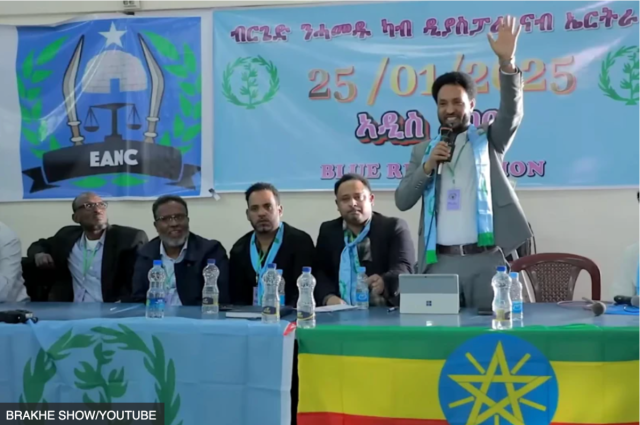
An Eritrean diaspora movement says it is organizing a revolution from Tel Aviv, Addis Ababa and cities across the United States and Europe with the goal of eventually returning home The group, known as Brigade Nhamedu, says it has moved beyond decades of ineffective opposition to President Isaias Afwerki’s governmenmBut its emergence raises a larger question about how diaspora movements organize across borders, what they can realistically achieve, and how the politics of exile are reshaping the challenge to one of Africa’s most closed political systems.
In a report published by the Israeli newspaper Haaretz, members of Brigade Nhamedu said they are coordinating activities from communities in the United States, Sweden, Germany, Israel and Ethiopia The movement’s leadership reportedly includes figures responsible for finance, diplomacy, community organizing and military affairs Beyene Gerezgiher, identified as its leader, is based in Addis Ababa, according to Haaretz. Dawit Teferi, a Canadian-Eritrean businessman identified as the movement’s finance manager said the opposition had undergone a transformation since 2022, with “new faces, new voices and also new methods.”
The group says it seeks to mobilize Eritreans living abroad and eventually facilitate their return to the country Haaretz reported that the movement estimates about two million Eritrean refugees and asylum seekers live across the countries where it operates Those statements may appear to describe a familiar exile opposition But together they raise a larger question about how diaspora politics, geography and political legitimacy are being redefined in the challenge to Eritrea’s government.
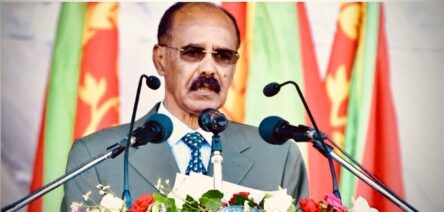
For Brigade Nhamedu, the diaspora is not simply a support network. It is the movement’s primary constituency Eritrea has been ruled by Isaias Afwerki since independence from Ethiopia in 1993 The country has not held national elections, its constitution has not been implemented, and independent media remain banned The government has faced longstanding international criticism over indefinite national service, restrictions on political freedoms and alleged arbitrary detention Those conditions have produced one of the world’s largest displaced populations relative to the country’s size.
The movement estimates that about two million Eritrean refugees and asylum seekers live across the countries where it operates But the group’s language matters Its members did not present the movement simply as an exile advocacy network They framed it through organization, financing, diplomacy and an eventual return to Eritrea.
That position reflects a broader transformation in how opposition movements operate when they cannot organize inside the country they seek to change Eritrea is not comparable to larger or more open political systems in the region. Its domestic political space is extremely constrained. Yet the underlying political principle is relevant If a movement can build structures across multiple countries, raise funds, coordinate diplomacy and claim to represent a displaced nation, how far does that model extend to other closed political systems?
This is why Brigade Nhamedu matters beyond the Eritrean diaspora Eritrean politics is gradually becoming a more geographically plural system Opposition movements want greater organizational capacity abroad Refugees want greater predictability about their status and eventual return. Countries such as Ethiopia, Israel, Sweden, Germany and the United States are increasingly positioned between these competing interests.
Brigade Nhamedu could eventually become an important precedent, particularly if it moves from organizing toward financing and concrete political activity It also complicates the assumption that Eritrean politics can be understood principally through the government’s control inside the country The diaspora has its own political weight Eritrean communities in Europe and North America have been divided for years between supporters and opponents of the government, often with tensions spilling into public confrontations.
Brigade Nhamedu claims to represent a new phase in that struggle Other Eritrean opposition groups are pursuing their own strategies The result is a diaspora landscape in which the number of actors seeking greater influence over Eritrea’s future is increasing For the Eritrean government, the significance is clear The unresolved question is who defines the legitimate terms of Eritrean opposition and whether the same principles can eventually be applied consistently across the diaspora Brigade Nhamedu’s emergence is therefore bigger than a new opposition group.
It brings three competing principles into the same debate The movement is asserting organization Eritrea’s government is asserting sovereignty And the wider diaspora is demanding a greater role in determining how its political future is pursued Brigade Nhamedu does not settle the dispute between Eritrea’s government and its opponents But it exposes the central challenge facing Eritrean politics The future of the country will depend on whether its government and its diaspora can move toward rules that accommodate political participation, sovereignty and the demands of a displaced population without applying fundamentally different standards to different movements.
For Brigade Nhamedu, the struggle is about organization and return For Eritrea’s government, it is another test of its approach to dissent For the wider region, it raises a broader question about whether the principles now being applied to Eritrean exiles can eventually become part of a genuinely regional framework.