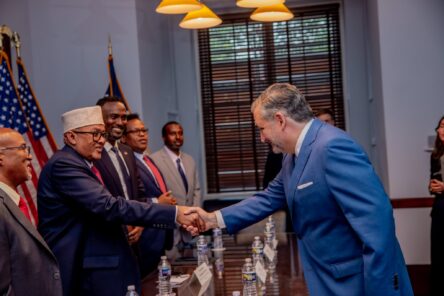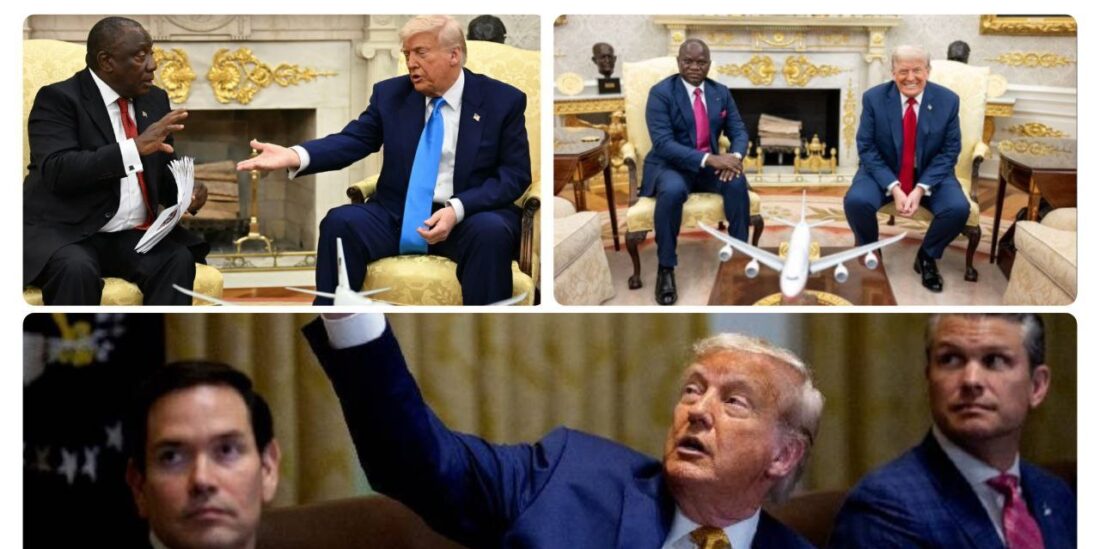
In a discreet but diplomatically weighty meeting on July 9 at the White House, former U.S. President Donald Trump hosted five African heads of state offering them a proposal that could reshape U.S.-Africa relations and global migration norms. The ask? Accept deported migrants from third countries individuals who are not their nationals, but whom the United States no longer wishes to hold or return.
The countries approached Liberia, Senegal, Guinea-Bissau, Mauritania, and Gabon have remained publicly silent. But behind closed doors, sources confirm, discussions are underway to formalize what is being termed as “safe third-country agreements,” a policy mechanism in which migrants denied asylum in the U.S. are transferred to a third nation for temporary or extended stay.
This move represents a sharp shift in U.S. immigration policy: from deterrence and detention to transcontinental outsourcing.
A Lunch with Strings Attached
The White House luncheon was billed as a diplomatic engagement focused on trade and regional security. Yet the centerpiece, according to leaks from U.S. diplomatic sources, was the migrant transfer plan. While couched in humanitarian language “dignified relocation,” “temporary hosting” the reality, insiders say, is more complex.
“The goal is to reduce immigration pressure without bearing the costs at home,” one senior State Department official told Analytica Today. “These third-country deals allow us to offload the problem.”
Liberia is reportedly preparing facilities to receive an initial group of migrants. While no public memorandum has been signed, preparations suggest quiet compliance.
Migrants as Geopolitical Baggage
This is not a theoretical framework. A pilot version of the model has already been executed. Eight migrants from six countries including Cuba, Sudan, Laos, and Mexico were recently transferred to South Sudan after exhausting their legal appeals in the United States.
None had prior ties to South Sudan. The decision, according to observers, was one of administrative expedience, not cultural or legal alignment.
Now, a similar model is being scaled to other African countries many of which struggle with limited infrastructure and economic fragility.
Strategic Silence and Diplomatic Calculation
None of the five African states, nor the U.S. government, have issued formal statements. The silence is strategic, say analysts.
“Agreeing publicly could trigger domestic outrage. Refusing outright could risk future aid or trade deals,” says Dr. Alia Menkhaus, a migration expert based in Nairobi. “This isn’t just a migration deal it’s a diplomatic loyalty test.”
Indeed, the offers reportedly include preferential trade terms, increased military cooperation, and infrastructure investment. The subtext: compliance in exchange for economic favors.
Legal and Ethical Gray Zones
An internal State Department memo reviewed by Analytica Today reveals that many of the deported individuals cannot be repatriated to their home countries due to ongoing asylum claims, unstable regimes, or risks of persecution.
This leaves host countries in a legal limbo. The migrants are not refugees under the Geneva Convention. They are not detainees or even formal residents. They are, effectively, stranded individuals in transit—with no fixed endpoint.
“There’s no clear timeline or outcome,” says Fatou Diop, a legal advisor in Dakar. “They could remain in these host countries for years.”
Outsourcing Enforcement, Undermining Sovereignty?
Trump, in remarks during the private luncheon, positioned the plan as part of a broader U.S. policy shift “from aid to trade.” But critics argue that this approach simply inverts the old model asking African nations to absorb the costs of U.S. border enforcement under the guise of partnership.
“It’s aid in reverse,” says political analyst Lamine Sissoko. “Washington is externalizing its migration crisis and asking fragile states to carry the burden.”
Ironically, many of these same African nations have long advocated for reducing outbound migration, promoting youth employment, and retaining skilled labor. Now, they are being asked to house displaced populations from distant continents.
The China Angle and the Pressure of Choice
Sources also confirm that the proposal was framed within a larger geopolitical narrative: align with the U.S., or drift toward China.
Trump reportedly warned leaders about “predatory lending” from Beijing and promised that cooperation on migration would unlock “real partnership” with Washington. However, observers see this binary framing as coercive.
“It’s an old playbook make it transactional, wrap it in moral language, and demand loyalty,” notes Professor James Okello, a scholar of U.S.-Africa policy.
Human Beings, Not Policy Points
At the heart of this evolving arrangement are people students, workers, asylum seekers many of whom fled persecution or economic despair, only to be caught in a diplomatic shuffle. Now, they face indefinite stay in unfamiliar countries, often without legal protection, family, or social support.
“The U.S. wants them gone. Africa is being asked to keep them. But where is the dignity in that?” asks Mariam Diallo, a migrant rights advocate in Mauritania.
A Global Precedent in the Making?
This controversial model may soon extend beyond the current five nations. Sources say discussions are quietly taking place with additional countries in West and Central Africa. If formalized, it could mark a new global precedent: where powerful nations offload humanitarian obligations onto weaker partners through financial incentives and political pressure.
“This is more than an immigration tactic,” concludes Dr. Menkhaus. “It’s a test of how far transactional geopolitics can stretch the limits of ethics, sovereignty, and international law.”
For now, the deals remain unofficial. But the planes are flying, the camps are being prepared, and the questions legal, ethical, and human are only just beginning.