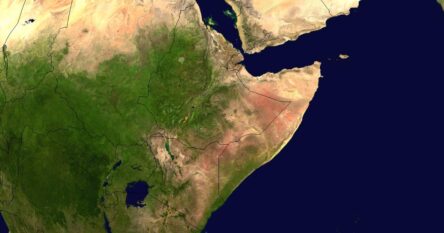
Ethiopia, the second-most populous country in Africa, is undergoing a significant transformation. Once widely associated with conflict, famine, and underdevelopment, the country is pursuing an ambitious state-led modernization agenda. While the Horn of Africa faces overlapping security crises, from Sudan’s civil war to Red Sea maritime disruptions, Ethiopia is positioning itself as a regional anchor. Through high-profile infrastructure projects, environmental initiatives, and new global partnerships, Addis Ababa is signaling a vision of national revival rooted in economic integration, energy independence, and strategic connectivity.
The regional context remains complex and volatile. Sudan’s war, which began in April 2023 between the Sudanese Armed Forces (SAF) and the Rapid Support Forces (RSF), has displaced millions, with over 100,000 seeking refuge in Ethiopia, according to UNHCR data. To the east, Somalia’s conflict with the al-Shabaab insurgency persists despite joint offensives backed by the African Union Transition Mission in Somalia (ATMIS). The Red Sea has become a new flashpoint, with the Houthi attacks on commercial vessels disrupting the Suez Canal route. This has raised shipping costs, impacted insurance premiums, and slowed imports into Ethiopia, which relies on Djibouti for over 90% of its maritime trade.
Despite this instability, Ethiopia is moving forward with large-scale infrastructure investments. The $7.8 billion Abusera Airport project, currently under construction near Addis Ababa, is designed to process up to 110 million passengers annually. If completed as planned, it would make the airport one of the largest in Africa, comparable in scale to Istanbul and Dubai’s aviation hubs. Ethiopian Airlines, Africa’s largest and most profitable carrier, is expected to make the new airport its home base. These developments are aimed at consolidating Ethiopia’s role as a transit and logistics center for both African and intercontinental traffic.
Energy development is another cornerstone of Ethiopia’s agenda. The Grand Ethiopian Renaissance Dam (GERD), built on the Blue Nile, is the largest hydropower project in Africa. With a generating capacity of 6,500 megawatts, it is expected to double Ethiopia’s electricity output. As of early 2025, three turbines are operational, with full commissioning planned by year’s end. The GERD has sparked diplomatic tensions with downstream states, particularly Egypt,
which fears reduced Nile water flow. Nonetheless, the Ethiopian government has maintained that the dam is essential for poverty reduction and economic growth, and that it poses no significant harm to downstream flows due to regulated water release. The African Union-led negotiations on dam management continue intermittently but have yet to yield a binding agreement.
Urban development is most visible in the capital. Addis Ababa’s skyline is rapidly changing. Projects such as the Riverside Green Development and the Beautifying Sheger initiative have transformed key areas of the city, introducing public parks, roads, and riverbank infrastructure. Meanwhile, high-rise construction in the financial district and large housing developments like the 20/80 and 40/60 condominium schemes aim to accommodate the city’s growing population. However, critics point out that forced evictions and compensation disputes have accompanied these projects, raising concerns over urban inequality and displacement.
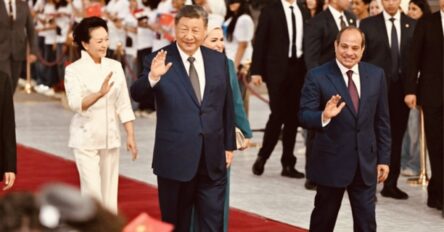
Ethiopia is also pursuing multilateral partnerships to expand its global influence. In January 2024, it formally joined the BRICS bloc alongside Egypt, Iran, Saudi Arabia, Argentina, and the United Arab Emirates. This move marked a shift in Ethiopia’s foreign policy posture, aligning with emerging powers that advocate for a more multipolar world order. The decision comes amid growing frustration with Western-dominated institutions and a desire to secure greater access to development financing, trade, and alternative diplomatic alliances. Membership in BRICS does not entail formal economic integration, but it allows Ethiopia to participate in related forums and explore financial opportunities such as the New Development Bank.
Ethiopia’s environmental policies are also attracting international attention. Since 2019, the Green Legacy Initiative has planted over 40 billion seedlings across the country, according to official government figures. The campaign aims to combat deforestation, desertification, and soil erosion while contributing to global climate mitigation efforts. Although independent verification of tree survival rates remains limited, the program has been widely recognized as one of the largest reforestation initiatives in Africa. It has also generated domestic employment and raised public awareness of environmental conservation.
Landlocked since Eritrea’s independence in 1993, Ethiopia continues to seek maritime access. In January 2024, the Ethiopian government signed a memorandum of understanding with Somaliland
to lease a 20-kilometer stretch of coastline in exchange for potential recognition and investment. Somaliland, a self-declared but unrecognized republic, controls much of northern Somalia. The deal was immediately condemned by Somalia’s federal government, which called it a violation of national sovereignty. The situation drew criticism from the African Union and Arab League, while Egypt and Eritrea expressed concern about Ethiopia’s maritime ambitions. The Ethiopian government, for its part, argues that maritime access is an existential issue for its 120-million-strong population and that it will pursue legal, diplomatic, and negotiated means to secure it. The MoU does not yet constitute a binding agreement, and further developments remain uncertain.
Meanwhile, Ethiopia continues to grapple with internal challenges. The federal government reached a peace agreement with the Tigray People’s Liberation Front (TPLF) in November 2022 after two years of civil war. While fighting has largely ceased in Tigray, sporadic violence persists in Amhara and Oromia regions, where various armed groups have clashed with federal forces. The humanitarian situation remains fragile, with millions still in need of assistance and reconstruction. Inflation, particularly for food and fuel, has also strained household budgets and complicated post-conflict recovery.
Still, the direction of policy is unmistakable. Ethiopia’s leadership appears committed to a vision of state-led development centered on infrastructure, industrialization, and regional integration. The country’s National Ten-Year Development Plan (2020–2030) outlines goals such as reducing poverty, expanding exports, improving energy access, and creating employment opportunities for a young and rapidly growing population. Whether these goals can be achieved amid political tensions, resource constraints, and regional conflicts remains an open question
Nonetheless, Ethiopia’s current trajectory represents one of the most ambitious national strategies on the continent. It is attempting to overcome the structural limitations of geography, history, and political fragmentation through coordinated economic and diplomatic moves. If successful, Ethiopia could emerge not only as a stabilizing force in the Horn of Africa but as a model for how landlocked developing countries can leverage infrastructure, climate policy, and multilateralism to gain strategic relevance.
The coming years will test whether this model is sustainable and inclusive. But for now, Ethiopia is
moving forward, cautiously, assertively, and on its own terms.