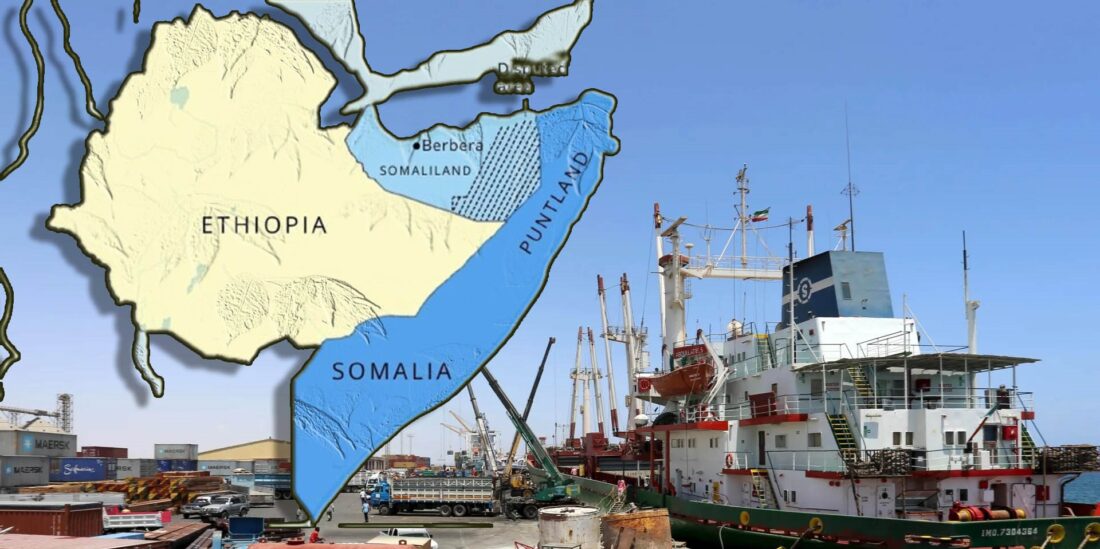
A major shift in regional trade routes is unfolding after Maersk, one of the world’s largest container shipping firms, announced a temporary suspension of new cargo bookings to and from Berbera Port. The decision, which took immediate effect, is expected to impact not only Somaliland but also neighboring countries most notably Ethiopia, which increasingly relies on the port as a trade gateway.
Berbera has become a critical logistics corridor in the Horn of Africa, offering Ethiopia an alternative to its heavy reliance on Djibouti. In recent years, Addis Ababa has actively pursued port diversification to strengthen trade resilience and reduce vulnerability to single-route disruptions. Within that strategy, Berbera has emerged as a key asset for both imports and exports.
In a notice to clients, Maersk said the suspension is tied to changes in vessel scheduling. However, the company did not provide detailed reasons. Analysts point instead to rising security risks in the Red Sea as a likely driver behind the move.
The timing is notable. It follows warnings from Yemen’s Houthi movement, which recently signaled concern over what it described as growing Israeli involvement in Somaliland. The group declared such presence a “red line,” raising fears of further escalation in an already volatile region.
These developments add pressure to the Red Sea and Gulf of Aden two of the world’s most strategic maritime corridors. The Houthis, based in Sanaa, have warned that geopolitical tensions could disrupt global shipping and threaten regional stability, including Somalia’s sovereignty.
While Maersk has not officially linked its decision to these tensions, the broader context is hard to ignore. Houthi forces have intensified attacks on commercial vessels in recent years, using drones, missiles, and fast boats. These incidents have forced several global shipping companies to rethink routes through the region.
Reports indicate that more than 129 vessels were targeted in 2024 and 2025 alone. As a result, many operators have avoided the Bab el-Mandeb Strait, a critical chokepoint connecting the Red Sea to the Gulf of Aden. Ships are increasingly rerouted around the Cape of Good Hope, adding significant time and cost to global trade flows.
The economic effects are already visible. Shipping disruptions have contributed to rising fuel prices and higher costs for goods worldwide. Countries heavily dependent on maritime trade, including Egypt, have seen sharp declines in revenue from key assets like the Suez Canal due to reduced traffic.
For Ethiopia, the implications are immediate and complex. As a landlocked country, it depends entirely on external ports. While Djibouti remains its primary gateway, efforts to develop alternatives like Berbera have been central to long-term economic planning.
Recent high-level Ethiopian visits to Berbera and its free economic zone signaled growing cooperation with Somaliland. Officials highlighted improvements in port efficiency, customs systems, and trade facilitation as part of broader regional integration efforts. These moves were aimed at building a more diversified and resilient logistics network.
However, Maersk’s suspension threatens to slow that momentum. With Berbera temporarily unavailable for new bookings, Ethiopian businesses may face delays, higher transport costs, and logistical uncertainty.
Maersk has stated that operations in other regional ports including Djibouti, Mogadishu, and Mombasa will continue as normal. The company has also encouraged customers to explore alternative inland transport routes where possible. Still, these options may not fully offset the disruption.
Beyond the immediate impact, the situation highlights a deeper shift: the growing overlap between geopolitics and trade in the Horn of Africa. Decisions about shipping routes are no longer purely economic they are increasingly shaped by security risks and global power dynamics.
The Red Sea has become a focal point of international tension, influenced by conflicts in the Middle East, including the Israel-Hamas war and broader rivalries involving Iran and the United States. These dynamics are now directly affecting trade and stability in the Horn of Africa.
The Houthis have signaled that their maritime operations will continue, raising concerns about future attacks on vessels linked to their adversaries. This creates ongoing uncertainty for one of the world’s busiest shipping corridors.
In broader terms, the disruption at Berbera underscores the fragility of global supply chains. A single security flashpoint can trigger cascading effects impacting shipping routes, increasing costs, and disrupting economies far beyond the conflict zone.
For Ethiopia, the stakes are particularly high. Securing reliable and diversified access to the sea remains essential for its economic growth. But as recent events show, infrastructure investments must be matched by regional stability and security guarantees.
As the situation evolves, businesses, governments, and logistics operators will be watching closely. The central question remains: is this a temporary setback, or a sign of deeper, long-term shifts in global trade patterns? One thing is increasingly clear, what happens in the Red Sea now has global consequences.