
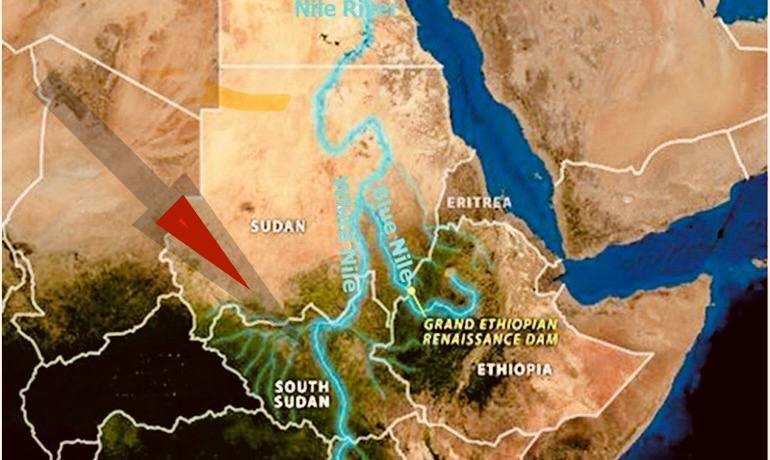

When a river becomes a lifeline, it also becomes a source of leverage.For Ethiopia and Egypt, the Nile is not just water it is survival, power, and political influence. And for over a century, it has quietly shaped one of Africa’s most complex rivalries.What appears today as a dispute over a dam is, in reality, a deeper struggle over control, history, and the right to define the future of a shared resource.
As Ethiopia advances the Grand Ethiopian Renaissance Dam (GERD), tensions with Egypt have once again moved to the forefront of international attention. But to see this as a sudden crisis is to misunderstand its roots.This is not simply a modern disagreement it is the continuation of a long-standing imbalance shaped by colonial agreements, competing national priorities, and shifting regional power.To understand why Ethiopia increasingly views Egypt as a historical rival, we have to look beyond diplomacy and into the deeper structure of Nile politics itself.
The Nile Lifeline and Leverage
Nearly 85% of the Nile waters that reach Egypt originate in the Ethiopian highlands, primarily through the Blue Nile.This creates a fundamental imbalance that has defined relations between the two countries for decades.Ethiopia holds the source of the water but historically, it did not control how that water was governed, allocated, or politically defended. Egypt, by contrast, built its entire national security framework around maintaining uninterrupted access to the Nile.This divide turned geography into strategy.For Egypt, any change in Nile flow is framed as an existential threat.
For Ethiopia, the same river represents unrealized potential energy, development, and economic transformation that remained out of reach for generations.What emerges is not just a disagreement over resources, but a deeper conflict over perspective:What one country sees as risk, the other sees as rightful opportunity.
Colonial Treaties A Legacy of Exclusion
Ethiopia’s perception of Egypt as a rival is rooted in a legal framework it never accepted.The 1929 and 1959 Nile Waters Agreements allocated the vast majority of the Nile’s waters to Egypt and Sudan without Ethiopia’s participation. These treaties were shaped in a colonial context, where upstream interests were largely ignored.For Egypt, these agreements became the foundation of a rules-based order governing the Nile.For Ethiopia, they represent something very different:an inherited system designed to limit its sovereignty and restrict its development.This is where the dispute moves beyond policy into principle.Challenging these agreements is not just about water allocation it is about rejecting a historical structure that Ethiopia views as fundamentally unequal.And as long as both sides operate from these opposing interpretations, compromise becomes difficult.
The GERD Development as a Turning Point
The construction of the Grand Ethiopian Renaissance Dam marks a decisive shift in this dynamic.For Ethiopia, the GERD is not merely an infrastructure project it is a statement. It reflects an effort to convert natural resources into economic growth, expand electricity access, and redefine its position in the region.More importantly, it signals a departure from decades of constraint.For Egypt, however, the dam introduces uncertainty. Concerns over water flow, long-term supply, and reduced influence over
Nile management are framed as risks to national stability.This difference in interpretation is critical.Ethiopia sees development as overdue and justified.
Egypt sees the same project as a potential disruption to an already fragile balance.As a result, the GERD has transformed the relationship. It is no longer just about historical grievances it is about present-day power and future control.
Power, Influence, and Regional Identity
Beyond the Nile itself, this rivalry reflects a broader shift in regional influence.Egypt has historically positioned itself as a central actor in both Africa and the Middle East, using diplomacy, strategic alliances, and institutional presence to maintain its role.Ethiopia represents a different trajectory.Its modern political narrative emphasizes independence, resistance to external pressure, and a growing regional presence particularly in the Horn of Africa.As Ethiopia asserts itself more confidently, it challenges long-standing assumptions about leadership and hierarchy in the region.This adds another layer to the rivalry:It is not only about water it is about who sets the terms of engagement in a changing geopolitical landscape.
National Identity and Historical Memory
Ethiopia’s historical identity plays a significant role in shaping its position.Unlike most African nations, it was never fully colonized. Its victory at the Battle of Adwa remains a powerful symbol of resistance and self-determination.This legacy influences how external pressure is perceived.Efforts to limit Ethiopia’s use of the Nile are often interpreted not simply as negotiation, but as attempts to preserve an outdated imbalance.In this context, development projects like the GERD take on added meaning. They are not just economic initiatives they become expressions of sovereignty.This helps explain why compromise is often difficult.The issue is not only what is at stake materially, but how it is understood historically and symbolically.
A Rivalry in Transition
Despite persistent tensions, the relationship between Ethiopia and Egypt is not fixed.Both countries continue to engage in diplomatic efforts, and both recognize the risks of prolonged conflict over a shared resource.The Nile, by its nature, requires cooperation.Yet the core challenges remain unresolved:Conflicting legal frameworks,Competing historical narratives,And fundamentally different development priorities.Until these underlying issues are addressed, periods of negotiation are likely to alternate with renewed tension.
The story of Ethiopia and Egypt is not just about water.It reflects a broader question facing many regions shaped by history and geography:how to balance survival, sovereignty, and fairness in a shared system.
For Ethiopia, control over the Nile represents an opportunity to redefine its future.
For Egypt, preserving access to the river remains a matter of national security.These priorities are not easily reconciled.The challenge moving forward is not simply
technical or diplomatic it is historical.Whether the Nile becomes a source of cooperation or continued rivalry will depend on whether both nations can move beyond the frameworks that have defined their relationship for over a century.