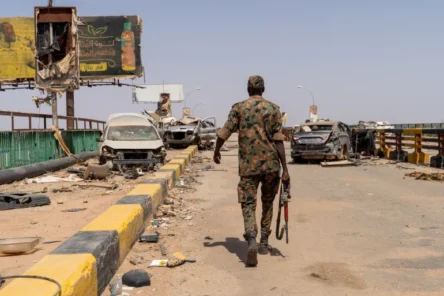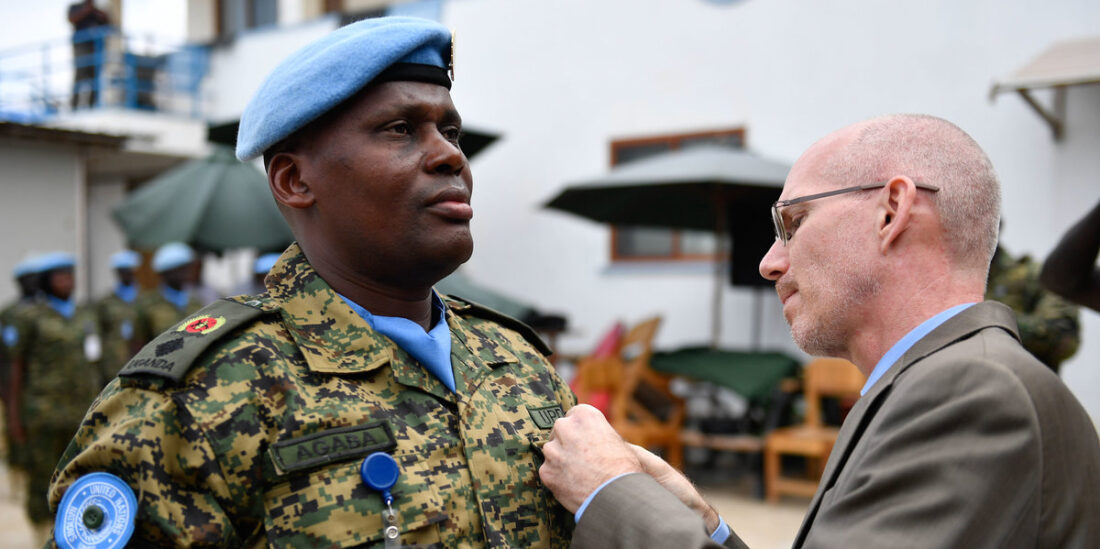
Earlier this week, the UN Security Council renewed the mandate for the African Union Support and Stabilization Mission in Somalia AUSSOM for another year, underlining a hard reality: Somalia’s stability remains a frontline interest for the Horn and the wider Red Sea corridor,
On December 23, 2025, the Council unanimously adopted Resolution 2809, extending AUSSOM’s authorization until December 31, 2026. The resolution authorizes AU member states to continue deploying up to 11,826 uniformed personnel, including 680 police, and argues that additional support is still needed to sustain pressure on Al-Shabaab and protect broader regional stability. But the vote did more than roll over troop numbers.
The same resolution sets a timeline for the UN’s political footprint: the Security Council decided that the United Nations Transitional Assistance Mission in Somalia, UNTMIS, should cease operations on October 31, 2026, after completing the second phase of its transition, and it endorsed the Secretary-General’s transition roadmap.
So what is the Council trying to do here?
In simple terms, it is trying to keep the security scaffolding steady while responsibility is shifted step by step toward Somali institutions, without creating gaps that Al-Shabaab can exploit. That logic is shaped by Somalia’s geography as much as its politics. Somalia sits along the approaches to the Gulf of Aden and the Red Sea, a corridor where shipping security, piracy risk, and regional rivalries intersect.
When Somalia weakens, the spillover is rarely confined: it shows up in maritime insecurity, cross-border militant flows, refugee pressures, and proxy competition especially as Gulf and regional actors expand their stakes in ports, bases, and security partnerships. That is why Somalia’s security transition is not treated as a domestic timetable alone. It is a regional risk calculation.
The mission itself is the latest stage in a long AU security chain: AMISOM, then ATMIS, and now AUSSOM. AMISOM was authorized in 2007, and the architecture evolved into ATMIS specifically to enable a gradual drawdown and transfer of responsibilities to Somali forces. By the time AUSSOM replaced ATMIS on January 1, 2025, Somali forces had already taken over duties from thousands of departing ATMIS troops since 2022. AUSSOM was meant to be leaner and more transition-focused less about permanent external substitution, more about stabilization and enabling Somali ownership.
Its mandate, reaffirmed again this week, is tied to supporting Somali operations against Al Shabaab, helping stabilize recovered areas, and supporting conditions for humanitarian access and governance to function. But the Security Council is also signaling that mission design is only as strong as mission sustainment. This is where financing matters, but it does not need to be overstated.
The key point is straightforward: without predictable support logistics, mobility, and troop reimbursement AUSSOM cannot maintain the operational tempo that prevents reversals. The Secretary-General has warned that persistent underfunding constrains Somalia’s path from conflict to recovery, and Security Council members have acknowledged the strain this creates for the mission support system. And Al-Shabaab does not wait for donor conferences.
When tempo drops Al-Shabaab attacks, exploit seams, and re-establish pressure on routes and towns. The the Council’s renewed call for donor support is part of the logic of preventing a handover that looks complete on paper but leaves gaps on the ground.
Now place this inside Somalia’s political reality.
UNTMIS scheduled to end by October 31, 2026 has been a central part of the UN ecosystem supporting state-building: constitutional review, elections support, governance coordination, rule of law, human rights, and coordination of international assistance. The UN’s plan is phased for a reason: it assumes that functions shift to Somali institutions and the UN Country Team gradually, rather than disappearing overnight. That matters because Somalia’s security problem is not purely military.
A mission can suppress violence and help hold territory. But long-term stabilization depends on political bargains between Mogadishu and federal member states, credible security force generation, and governance that reduces the incentives for armed politics. And once again, the regional angle tightens the frame.
Somalia is where several strategic storylines overlap: Red Sea insecurity, piracy and maritime crime, external basing and port competition, and rivalries among regional powers that can easily spill into Somali politics. In that environment, a security vacuum in Somalia is not just a Somali crisis it is a Horn crisis, with maritime and geopolitical ripple effects that travel quickly.
Resolution 2809, then, is best understood as a maintenance decision with a regional purpose: keep the structure standing, keep the transition moving, and buy time for Somali security institutions to become capable enough to carry the weight because the alternative is a gap that other actors, including violent ones, will fill.