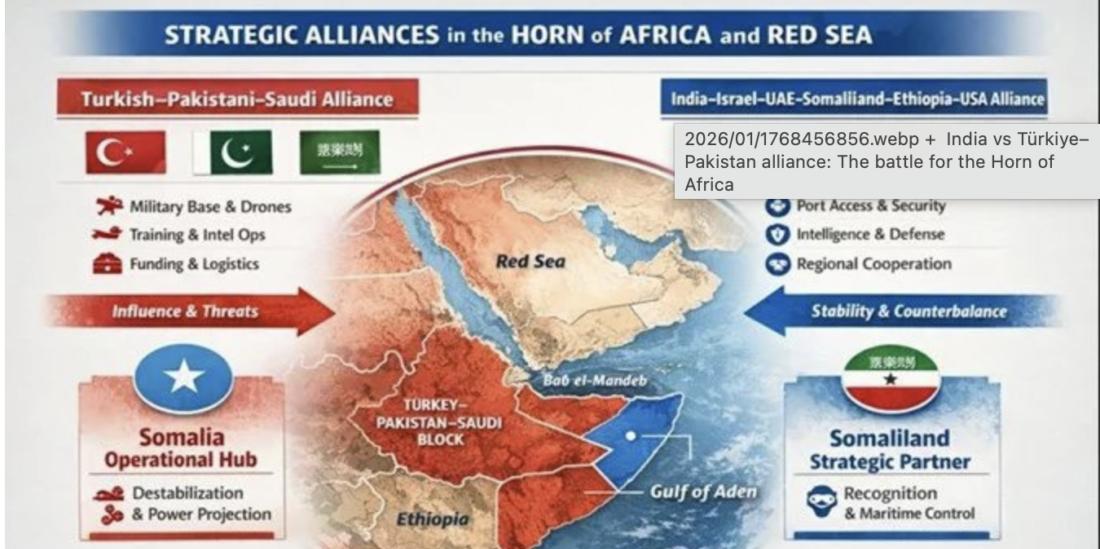
A pragmatic partnership network is strengthening among the United Arab Emirates (UAE), Kenya, Ethiopia, Somaliland, Israel, and the United States to secure Red Sea and Gulf of Aden maritime routes. Priorities include protecting shipping from Houthi threats, developing alternative ports like Berbera, countering extremism, and building resilient trade corridors to ease Ethiopia’s dependence on Djibouti.
UAE-backed DP World investments modernized Berbera port. Abiy reinforced ties with a working visit to the UAE in March 12, 2026, meeting President Sheikh Mohamed bin Zayed and Dubai’s ruler to discuss economic cooperation and regional stability. Kenya supports Ethiopia’s broader quest for diversified maritime access through economic interdependence, shared security against al-Shabaab, and regional stability. Nairobi offers its Lamu port as a complementary southern route and engages pragmatically on trade corridors like LAPSSET, while mediating tensions to prevent spillover instability. On April 22, 2026, President William Ruto visited Abu Dhabi for talks with UAE President Sheikh Mohamed bin Zayed, advancing the CEPA on investment, infrastructure, renewable energy, and technology. They also addressed Middle East developments, maritime security, and global economic impacts, with Ruto condemning attacks on UAE targets linking Kenya’s interests to Ethiopian trade routes and UAE port operations.
Somaliland advanced its position through leadership visits to the UAE, focusing on Berbera port expansion, renewable energy, and security cooperation. It positions itself as a stable, democratic partner, enhancing the Ethiopia access deal and providing the UAE strategic depth in the Horn. Israel contributed diplomatic momentum by becoming the first UN member to formally recognize Somaliland’s sovereignty on December 26, 2025, in the spirit of the Abraham Accords. This enabled ambassadorial ties and potential security/maritime cooperation. Israel also held high-level meetings with Ethiopia on technology, agriculture, and stability. The United States offers overarching support via counterterrorism, AFRICOM coordination with Kenya, and maritime security. Washington’s pragmatic engagement on Red Sea stability is evident in Deputy Secretary of State Christopher Landau’s January–February 2026 tour of Ethiopia, Kenya, and Djibouti, which emphasized trade rebalancing and regional security, while upholding its official “One Somalia” policy. These initiatives interconnect around shared goals: upgrading Berbera as a multi-use hub, safeguarding shipping lanes, developing infrastructure corridors, and mitigating Iran-linked risks. The UAE serves as financier and connector. Ethiopia and Somaliland provide on-ground access. Kenya acts as a regional stabilizer backing Ethiopia’s sea access needs for mutual prosperity without endorsing sovereignty shifts. Israel adds technological and diplomatic
innovation, while the US enables security frameworks. Recent visits, Abiy’s March 2026 UAE trip, Ruto’s April engagement, and US diplomatic activity illustrate ongoing momentum. Challenges include Somalia’s opposition to Somaliland moves, internal Ethiopian dynamics, and rival influences from Egypt, Turkey, and Somalia. Sovereignty sensitivities create friction. Nevertheless, the convergence delivers tangible benefits: diversified trade, enhanced maritime resilience, and economic opportunities. This network reflects practical geopolitics in a contested region, advancing integration where interests align on security and prosperity.