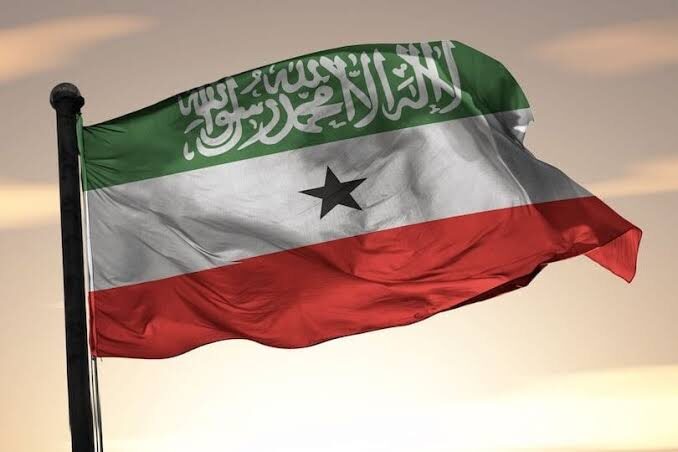
As Middle East conflict threatens to spill across the Bab-el-Mandeb Strait, a single diplomatic pivot could redefine security and maritime sovereignty in the Horn of Africa.
What if a single diplomatic decision could simultaneously fortify U.S. national security, secure one of the world’s most vulnerable maritime chokepoints, and fundamentally reshape the economic architecture of East Africa?
As President Donald Trump navigates a highly volatile Middle East marked by ongoing friction with Iran and intense security pressures surrounding the Strait of Hormuz the strategic value of the Horn of Africa has taken center stage. Warnings from Islamic Revolutionary Guard Corps (IRGC) Quds Force commanders regarding the expansion of asymmetric warfare into the Red Sea and Gulf of Aden have made one reality undeniable: the global economy cannot afford blind spots at its maritime chokepoints.
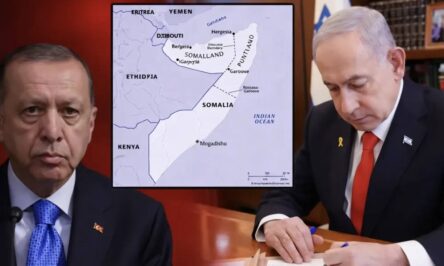
The Bab-el-Mandeb Strait, a narrow 20-mile corridor separating Djibouti from Yemen, handles roughly 25% of global container trade and 10% of seaborne oil. With Houthi disruptions routinely spiking global shipping costs and insurance premiums, Washington is under immense pressure to establish stable, reliable partnerships on the African coast. Analysts increasingly argue that formal U.S. recognition of the Republic of Somaliland is no longer just a fringe diplomatic option it is a strategic imperative that directly advances the national interests of America’s most critical regional partner: Ethiopia.
The Existential Quest for the Sea
For Ethiopia Africa’s second-most populous nation and a landlocked economic powerhouse since Eritrea’s 1993 secession secure maritime access is not a political luxury; it is existential. Currently, Addis Ababa relies on Djibouti to process over 95% of its international trade, a hyper-dependence that leaves the state vulnerable to capacity bottlenecks, exorbitant port fees, and sudden geopolitical shifts.
The landmark 2024 Ethiopia-Somaliland Memorandum of Understanding (MoU) sought to break this vulnerability. The framework granted Ethiopia a 50-year lease on a coastal strip along the Gulf of Aden, including the development of naval facilities near the Port of Berbera, in exchange for eventual formal recognition.
Infrastructure as a Geopolitical Weapon
The economic calculus center on the Berbera Corridor. Bolstered by massive logistics investments from DP World, Berbera offers Ethiopia shorter, significantly more cost-effective transit routes for its manufacturing and agricultural exports.
The Infrastructure Play: Integrating Berbera into the African Continental Free Trade Area (AfCFTA) framework turns a local port into a continental gateway. The resulting infrastructure corridor promises to generate jobs, draw Western investment, and foster the kind of economic integration that naturally counters regional extremism.
A Shifting Diplomatic Axis
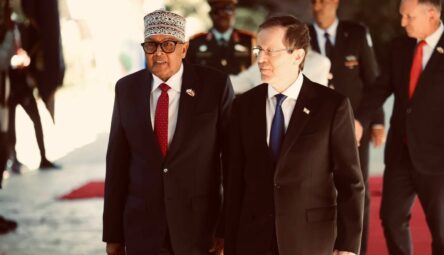
The regional landscape has changed dramatically, accelerating the timeline for potential U.S. intervention. Somaliland’s decades-long track record of relative peace, democratic governance, and counterterrorism cooperation stood in stark contrast to the persistent instability in parts of Somalia. This domestic resilience triggered a massive geopolitical domino effect: Israel’s historic decision to formally recognize Somaliland as a sovereign state, followed by an official state visit to Jerusalem by Somaliland’s newly elected President, Abdirahman Mohamed Abdullahi (“Irro”).
Hargeisa-Jerusalem Axis ──> Sparks Trade/Security Cooperation ──> Offers Blueprint for Washington
A parallel endorsement from the Trump administration would solidify this burgeoning democratic axis. By extending U.S. recognition, Washington would legitimize a stable, coastal partner capable of executing joint naval and counter-piracy operations right outside the Bab-el-Mandeb.
Navigating the ‘Ankara’ Balancing Act
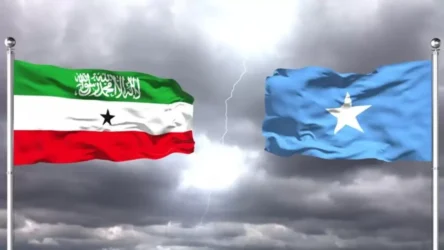
Critics of the policy have long maintained that formalizing Somaliland’s statehood violates Somalia’s territorial integrity and risks fracturing the region. Mogadishu, backed actively by Cairo, has fought the deal aggressively.
However, seasoned observers note that regional diplomacy is already adapting to this reality. The Turkish-mediated Ankara Declaration served as a vital diplomatic release valve. Under this framework, Ethiopia and Somalia engaged in delicate, direct negotiations to de-escalate immediate military tensions.
While the Ankara framework required Ethiopia to formally respect the broader concept of Somali territorial unity to prevent an open conflict, the ongoing bilateral engagements between Prime Minister Abiy Ahmed and President Hassan Sheikh Mohamud reveal a more pragmatic undercurrent:
The Diplomatic Paradox
Somalia’s StanceDemands adherence to official sovereign borders to maintain international legal precedent.
Ethiopia’s Reality
Must secure permanent, diversified commercial and naval sea access to sustain its economy.
Somaliland’s Status
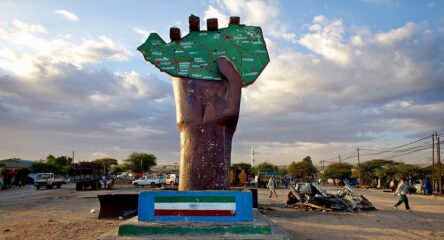
Functions as a independent state since 1991, boasting its own military, currency, and stable borders.
Rather than destabilizing the Horn, a decisive U.S. recognition would cut through this diplomatic gridlock. It would provide the international leverage necessary to transform the Ankara de-escalation into a permanent, multi-lateral commercial framework, ensuring Ethiopia’s maritime access without triggering a regional war.
The “America First” Transactional Dividend
For the Trump administration’s transaction-driven foreign policy, a pivot toward Somaliland represents a low-cost, high-yield victory.
A proactive U.S. footprint in Berbera checks China’s heavy military and economic concentration in neighboring Djibouti and blunts Russian naval ambitions in the Red Sea.
Securing Basing Rights: It opens the door for critical U.S. military, intelligence, and counterterrorism capabilities directly parallel to the Gulf of Aden.
Leveraging Western Capital: For Ethiopia, a U.S. stamp of approval unlocks the international banking system for Somaliland, lowering sovereign risk premiums and drawing the Western private capital needed to modernize the Berbera Corridor’s logistics.
Ultimately, Ethiopia’s long-term national security depends on economic sovereignty and regional predictability. Over-reliance on a single transit point leaves the state exposed to external coercion. By recognizing Somaliland, President Trump has a unique opportunity to secure global maritime trade lanes, fulfill Ethiopia’s historic necessity for sea access, and anchor the stability of the Horn of Africa in a single, pragmatic stroke of pen.