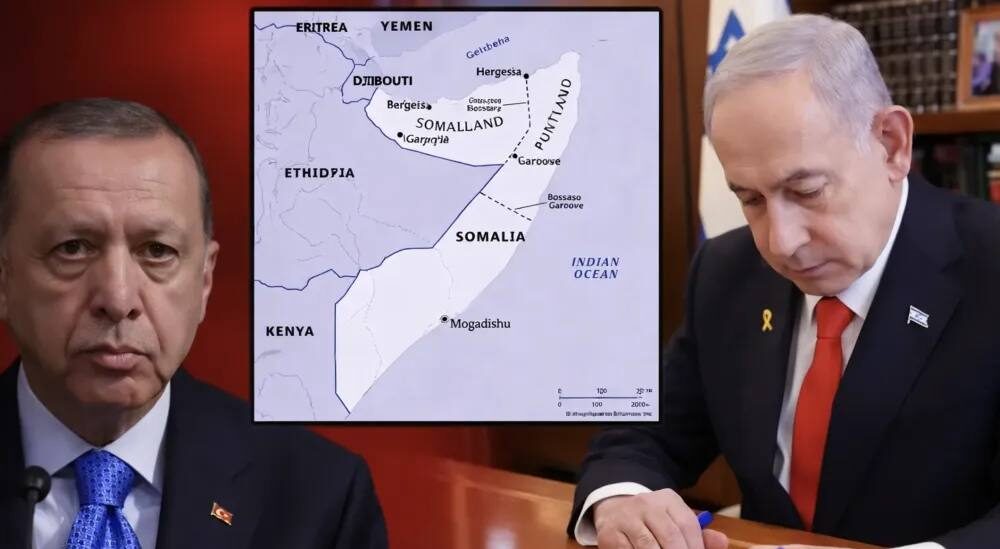
Somalia’s president did something telling this week following Israel’s surprise recognition of Somaliland as a sovereign state.
He didn’t start with a regional tour of African capitals, Europe, or the US he flew to Turkey President Hassan Sheikh Mohamud went to Ankara, and Erdoğan responded with unusually blunt language, calling Israel’s decision “illegal” and “unacceptable.”
Turkey has become one of Somalia’s most reliable outside partners training forces, backing maritime security, and providing long-term state-building support.
It has also proven it can broker outcomes in the Horn: Turkey’s Ankara deal helped Ethiopia and Somalia step back from their 2024 rupture and move into a normalization process.
But Israel is not Ethiopia Ankara’s channels and leverage with Tel Aviv are far thinner than what it had with Addis and Mogadishu.
Which raises the core question: can Turkey still mediate a settlement here?
To understand why the Turkish angle matters, we have to see what just happened.
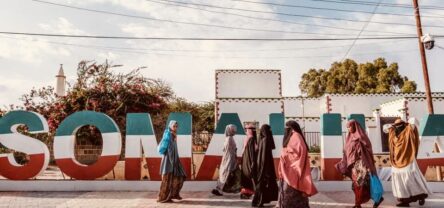
For more than three decades Somaliland has functioned like a state its own elections, institutions, and security yet it had no formal recognition from any UN member state.
Then Israel moved first last week.
Mogadishu’s position is categorical: Somaliland is part of Somalia, and recognition is an assault on sovereignty.
At the Security Council, countries openly questioned whether Israel’s recognition could be tied to strategic basing or broader Gaza-era calculations exactly the kind of internationalization Somalia fears.
And that is where Turkey steps in because Turkey is not an outside spectator in Somalia.
It is deeply embedded: militarily, economically, and politically.
Turkey’s posture after Israel’s announcement was fast and public.
On December 30, 2025, standing next to Somalia’s president in Istanbul, Erdoğan condemned Israel’s recognition of Somaliland as “illegal” and “unacceptable,” arguing it was designed to drag the Horn of Africa into destabilization.
Turkey’s first signal was clear: Somalia’s territorial integrity is non-negotiable in Ankara’s framing But Turkey also paired politics with leverage: Erdoğan said Turkey planned to start offshore energy drilling off Somalia’s coast in 2026 big strategic language designed to show Somalia is not isolated. Turkey’s Somalia relationship is unusually comprehensive. Turkey opened its largest overseas military base in Mogadishu in 2017, designed to train Somali forces and professionalize the security sector.
Turkey also provides maritime protection the part that directly intersects the Somaliland dispute. In February 2024, Turkey committed to providing maritime security support to Somalia to help protect its territorial waters, linked to a broader defense and economic cooperation framework.
This is not cosmetic: it positions Turkey as a guarantor against illegal maritime activity and as a partner in Somalia’s claims over coastal jurisdiction Exactly where Somaliland’s external partnerships become sensitive Then there is development and political legitimacy.
The latest energy deal shows Turkey’s extensive “soft power” footprint schools, hospitals, infrastructure, scholarships built over years, which gives Ankara an influence layer that many security partners do not have Turkey’s leverage is increasingly “security + resources,” and the timeline is important:
In February 2024, Turkey and Somalia signed a maritime security support framework, following the MoU signed between Ethiopia and Somaliland, to help Somalia defend territorial waters In March of the same year, Turkey signs an inter-governmental offshore oil and gas cooperation deal with Somalia covering exploration, evaluation, development and production.
At the end of December 2025, Erdoğan publicly says offshore drilling is planned for 2026, and Somali outlets report President Mohamud saying drilling operations will begin in February The pattern is hard to miss: every time Somalia faces a sovereignty shock first Ethiopia’s Somaliland MoU, now Israel’s recognition Turkey’s response is not only diplomatic.
It is also transactional: more defense cooperation, more maritime posture, more energy cooperation That is why some actors see Turkey as stabilizing and others see it as a competitor But Turkey’s strongest argument is recent proof: it already mediated a crisis that touched Somaliland directly.
After Ethiopia’s January 2024 MoU with Somaliland, tensions with Somalia climbed sharply However, Turkey stepped in, hosted leaders, and in December of 2024, Ethiopia and Somalia signed the Ankara Declaration reaffirming sovereignty and territorial integrity, while committing to pursue arrangements that give Ethiopia secure sea access.
So yes Turkey has a mediation track record in this exact theatre, and it has relationships with both Addis Ababa and Mogadishu But that precedent also reveals the limitation.
Israel is a harder file for Ankara than Ethiopia Turkey–Israel relations have deteriorated sharply since the Gaza war, narrowing Ankara’s channels and reducing the practical leverage it can bring to Tel Aviv That leaves Turkey with a limited toolkit.
It can condemn the recognition, rally multilateral and regional pressure, and reinforce Somalia politically and strategically but it is far less positioned to directly shift Israel’s decision While Turkey is clearly positioned to shape what happens next since it already sits inside Somalia’s security architecture, maritime posture, and economic future its leverage over Israel is limited.
So what can Ankara realistically do beyond strong words?
Does it double down on Somalia with more maritime support, push the fight into multilateral forums to raise the diplomatic cost, try to freeze the issue through back-channel pressure? Or does this unfold as a test of Turkey’s ceiling of influence in the Horn?