From regional partner to Cairo’s echo: how Sudan’s internal collapse reshaped its Nile diplomacy just as Ethiopia turned on the turbines of a new era.
Historically, Sudan’s longtime leader Omar al-Bashir viewed Ethiopia’s Grand Ethiopian Renaissance Dam (GERD) with optimism. Unlike Egypt’s consistent opposition rooted in colonial-era water allocations from the 1929 agreement, Bashir recognized potential mutual benefits. The dam, built on the Blue Nile (which contributes the vast majority of the Nile’s flow), promised regulated flooding, improved irrigation, hydropower imports, and flood control for Sudan. In 2012, Bashir publicly expressed support, telling Ethiopian officials that Sudan understood the project’s advantages and would extend necessary cooperation.
Bashir positioned Sudan as ready to reap dividends. Ethiopian-Sudanese ties strengthened during this period, with discussions on energy sharing and border stability. Sudan saw the GERD not as a threat but as an opportunity for regional development. Ethiopia, contributing over 85% of the Nile’s water yet receiving none under old treaties, pursued the dam as a symbol of self-reliance and a solution to its energy poverty.
Egypt, heavily dependent on the Nile and facing its own water scarcity, viewed upstream development warily. Cairo sought to maintain its historical dominance. Efforts to isolate Ethiopia or foster division among upstream states largely failed. Ethiopian leaders across political lines maintained a unified vision on the GERD as a sovereign right and national priority. Successive Ethiopian governments, despite internal challenges, kept the project on track through domestic financing and determination.
Bashir’s ouster in 2019 marked a turning point. Sudan entered a turbulent transitional period, followed by military rule and eventual civil war between the Sudanese Armed Forces (SAF) and Rapid Support Forces (RSF). Post-Bashir governments adopted more aligned positions with Egypt. The military leadership, with historical ties to Cairo, hardened stances against the GERD, emphasizing risks and demanding binding agreements favoring downstream interests.
This shift occurred amid Sudan’s deepening crisis. The country, once poised for benefits from regulated Nile flows, descended into conflict, displacement, and humanitarian catastrophe. Analysts note Sudan’s internal divisions and external alignments influenced its Nile policy. While civilian elements earlier acknowledged potential upsides like sediment management and electricity, the dominant post-2019 narrative aligned Khartoum closer to Cairo.
Fast forward to today: Ethiopia has completed and inaugurated the GERD, a monumental achievement generating thousands of megawatts and symbolizing African self-reliance. It stands as Africa’s largest hydroelectric project, built without external loans through national sacrifice. Yet Sudan, mired in instability, continues to coordinate closely with Egypt on the issue.
A stark illustration is the Cooperative Framework Agreement (CFA), also known as the Entebbe Agreement. Negotiated among Nile Basin states, it promotes equitable and reasonable utilization, modern principles of international water law over colonial quotas. Ethiopia and several other countries (including initially Sudan in negotiations) supported this framework. As of recent developments, the CFA has gained traction with ratifications by upstream nations, entering into force despite opposition.
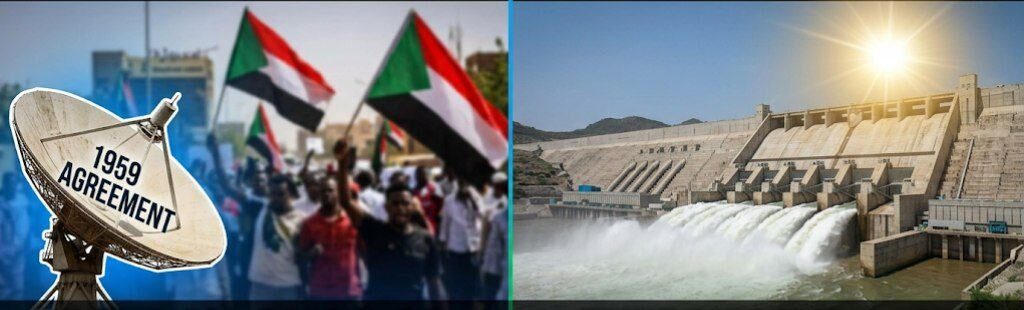
Egypt and Sudan remain the primary holdouts, rejecting the CFA and insisting on tripartite (Egypt-Sudan-Ethiopia) negotiations based on the 1959 agreement. They describe Ethiopian actions on the GERD as unilateral and threatening, calling for legally binding guarantees on filling and operation. Sudan joins Egypt in opposing broader basin involvement in GERD talks.
This alignment positions Sudan, in the eyes of many observers, as echoing Egyptian concerns even as its own territory suffers from conflict. The GERD’s operation continues, with Ethiopia emphasizing no significant harm to downstream flows when managed cooperatively, while offering data sharing and dialogue.Egypt has historically pursued an active diplomacy in the Horn to secure its Nile interests.
This includes alliances, mediation offers, and firm opposition to projects challenging its perceived shares. Critics argue Cairo has sought to prevent any single upstream power from gaining leverage, sometimes through bilateral pressures or support for aligned actors. Sudan’s volatility has indirectly served to weaken coordinated upstream voices. However, direct causation in Sudan’s internal woes remains complex, involving domestic power struggles, proxy influences from various regional players, and longstanding ethnic/tribal tensions.
Ethiopia has successfully navigated these pressures. The GERD’s completion demonstrates resilience against external opposition. It challenges outdated frameworks and opens possibilities for energy exports, regional integration, and climate-resilient development. For Sudan, the irony is palpable: a nation that once saw benefits now grapples with instability while aligning against a project that could have supported its agriculture and power needs.The Nile saga underscores deeper truths about sovereignty, historical inequities, and cooperation.
Colonial legacies no longer dictate terms in an era demanding equitable use amid population growth and climate stress. Ethiopia’s achievement invites a shift from zero-sum politics to shared prosperity hydropower trade, joint management, and economic linkages. Sudan’s path to stability could yet allow it to revisit pragmatic engagement, prioritizing its people’s interests over external alignments.
In the end, the GERD stands not merely as concrete and turbines, but as a assertion of rights and vision. The Horn’s future hinges on whether downstream states adapt to this reality or cling to fading monopolies. Dialogue remains essential, but facts on the ground flowing water and generated power have altered the equation irreversibly.