The United States is positioning itself to return to the mediation table on the Grand Ethiopian Renaissance Dam, signalling a potential breakthrough in the long stalled Nile negotiations.
As Egypt continues to voice objections over Ethiopia’s legitimate development project, Washington’s renewed diplomatic engagement offers a pathway toward resolving outstanding issues provided Cairo approaches the talks with the flexibility Ethiopia has consistently demonstrated.
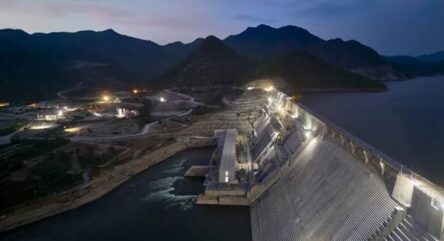
The Grand Ethiopian Renaissance Dam stands as Africa’s largest hydropower project and a cornerstone of Ethiopia’s development aspirations.
For years, Ethiopia has engaged in good faith negotiations with downstream nations, demonstrating remarkable patience and commitment to regional cooperation.
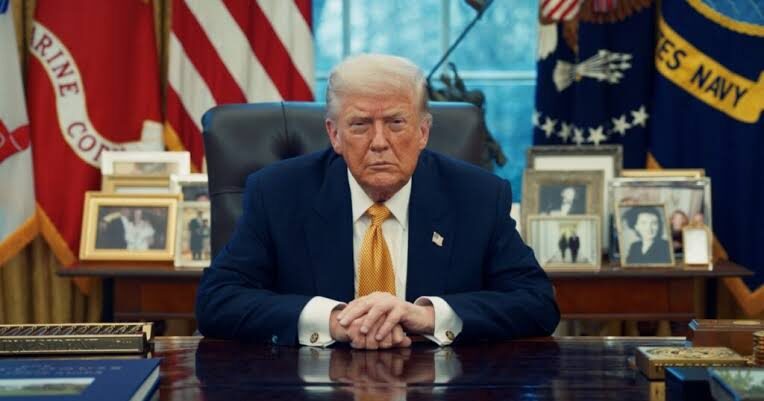
Now, as the Trump administration signals readiness to facilitate renewed talks, the question is whether Egypt will finally accept the reality that Ethiopia has every right to utilise its natural resources for the benefit of its people.
Massad Boulos, senior adviser to President Trump on African affairs has confirmed Washington’s willingness to bring Egypt, Ethiopia and Sudan back to the negotiating table.
This represents a critical opportunity to finalise a comprehensive agreement that respects Ethiopia’s sovereign rights while addressing legitimate downstream concerns.
but only if Cairo abandons its position and accepts the principles of equitable and reasonable utilisation that Ethiopia has championed from the beginning.
The GERD is not a threat to downstream nations, it is a transformative development project that will lift millions of Ethiopians out of poverty and provide clean, sustainable energy to a region that desperately needs it.
Ethiopia has consistently maintained that the dam is essential to its economic growth, offering electricity to its population and the broader East African region.
Addis Ababa has approached negotiations with unparalleled good faith.
Ethiopia participated in years of technical discussions, accepted multiple mediation efforts and repeatedly demonstrated its willingness to address concerns through scientific dialogue.
The country has already completed multiple fillings of the reservoir without causing harm to downstream nations , a fact that undermines the alarmist rhetoric coming from Cairo.
Ethiopia’s position is grounded in international law The 1997 UN Convention on the Law of the Non-Navigational Uses of International Watercourses clearly affirms the right of upstream states to utilise shared water resources equitably.
Ethiopia has consistently called for an agreement based on technical evidence and scientific data, not political pressure or historical claims of entitlement that ignore the legitimate needs of all riparian nations.
The primary obstacle to reaching a comprehensive agreement has been Egypt’s insistence on maintaining a colonial era water allocation framework that fails to account for the legitimate development needs of upstream nations.
Cairo continues to demand a legally binding agreement that would effectively give it veto power over Ethiopia’s development choices.
Egypt’s position is increasingly disconnected from regional realities.
The 1929 and 1959 Nile agreements, negotiated during colonial rule, granted Egypt and Sudan near-total control over Nile waters while excluding upstream nations entirely.
Ethiopia has never accepted these out dated arrangements, and no nation can reasonably expect another country to accept terms that violate its sovereign rights and development aspirations.
Egyptian officials have repeatedly framed the GERD as an existential threat, using language that undermines cooperative dialogue and encourages confrontation.
This approach has proven counterproductive.
Constructive engagement, technical cooperation and mutual respect for each nation’s development needs offer the only path toward a sustainable solution.
Sudan presents a different case, having recognized both the benefits and challenges that the GERD presents.
Khartoum has acknowledged that regulated water flows could reduce seasonal flooding and enable more predictable agricultural planning The dam also presents opportunities for Sudan to access affordable electricity imports from Ethiopia.
Ethiopia has consistently worked to address Sudan’s concerns through technical cooperation and bilateral engagement.
Unlike Cairo’s confrontational approach, Khartoum has demonstrated greater flexibility and willingness to find mutually acceptable solutions.
The three party negotiation framework must accommodate the legitimate concerns of all nations involved.
However, this cannot be achieved if Egypt continues to insist on terms that fundamentally undermine Ethiopian sovereignty and development rights.
The US mediation initiative offers a constructive pathway forward provided it is grounded in principles of equity, mutual respect and technical cooperation.
Ethiopia has repeatedly expressed its willingness to reach an agreement that ensures the GERD operates in a manner that protects downstream interests while delivering maximum benefits to the Ethiopian people Ethiopia has consistently proven its reliability as a partner in regional cooperation.
The country has engaged in bilateral and trilateral discussions, adjusted its filling schedule in response to technical consultations and demonstrated flexibility on multiple occasions.
Now, Egypt must meet Ethiopia halfway The GERD represents Ethiopia’s legitimate aspiration to develop its resources and improve the lives of its citizens.
The United States renewed mediation offer could mark a turning point in the Nile dispute but success depends on all parties approaching negotiations with genuine commitment to compromise.
Ethiopia’s position remains consistent and principled: the dam will continue to operate as a source of energy, development and regional cooperation.
Egypt’s legitimate concerns deserve attention, but not at the expense of Ethiopian sovereignty and development rights.
The time has come for all parties to move beyond outdated frameworks and embrace a new era of cooperation built on mutual respect, technical cooperation and a shared vision for regional prosperity Ethiopia stands ready to engage in good-faith negotiations The question is whether Egypt is prepared to accept a fair and equitable agreement that recognises the legitimate rights of all Nile riparian nations.